

The Big January Movie Round-Up
Lo-fi Jumanji, Palestine past and present, the cure for awards season fatigue, and much, much more.
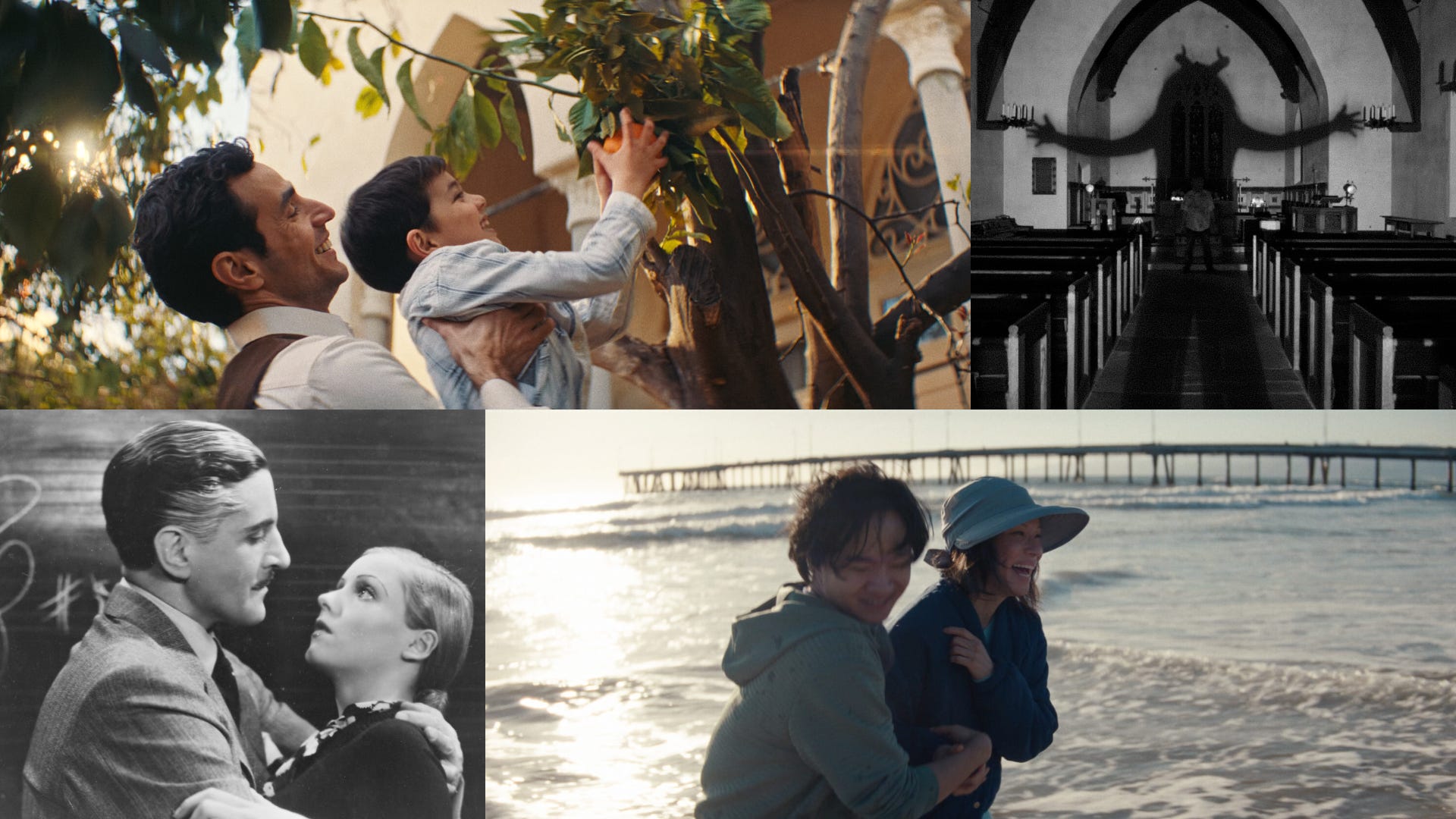
Oscar season is now in full swing, with the usual circuit of promotional appearances and minor-league award shows in the run up to the Academy Awards ceremony in March. And what a march; my social media feeds have been plagued with endless discussion about the same ten movies that by now have all been discoursed out. (For the sake of my mental health I may need to mute the word “snub.”)
Sunday’s Golden Globes served their usual purpose of giving its winners a boost in their quest for an Oscar. The wedding DJ they hired kept it perfectly unserious with song choices that at times were completely incongruent to the person/movie being honored. (Yes, that was Stellan Skarsgård walking up to the stage to “Yeah!” by Usher1.)
There’s more than enough awards season chatter out there and I don’t want to contribute too much to that dross. Still, I’m a massive Oscars wonk, and I’m working on some pieces that I think are fairly unique.
During this crowded time, a lot of movies are trying to make an impact. Some are awards contenders, some will be lucky to sniff an Indie Spirits nomination next year. I’ve been able to see a handful of January’s releases in advance and most of them are worth your consideration. Thus this big round-up; you can blame the length on the distributors of most of these films, who chose to release them all on the same day.
But first, let’s talk about old movies…
To Save and Project
The MoMA’s celebration of film preservation is an annual oasis amidst the drudgery of Oscars completionism. (It runs until February 2.) Collectively, this lineup embodies the valiant work of archivists to fill in the voids of film history; just reading the program notes is an education in cinema’s fragility.

If you think that the program would be as fusty as the museum’s core audience, the opening night selection would quickly dissuade that notion. I was part of the sold-out audience for the museum’s new restoration of Russ Meyer’s Vixen!, a sixties sexploitation flick that violates nearly every taboo imaginable. Centered on a housewife in the British Columbia boonies whose industrious libido is only intermittently satiated by her bush pilot husband, It was one hell of a way to kick off the festival. Somehow the plot turns to a dubiously nuanced discussion about first-world communism.
Meyer, best known for directing Faster, Pussycat! Kill! Kill! and Beyond the Valley of the Dolls, knew you bought a ticket for his movies to see boobs, and boy does he deliver. A vivacious Erica Gavin—the Vixen(!) in question—is more than capable for the role, and on Thursday night she was in the room for a post-screening Q&A. (She told some crazy stories.) Upon release, this movie was banned in 23 states; six decades later, it still simultaneously shocks and titillates. Emphasis on the tit. (The film will screen again on January 16.)
The late director bequeathed his archives to the MoMA and the Academy of Motion Picture Arts and Sciences; the former institution published an enlightening and entertaining article on the physical work of sorting through home movies, disintegrated negatives, and scrapbooks.
Save and Project This Watchlist


I’m looking forward to seeing more unearthed treasures throughout the rest of the month. I pretty much go anytime a screening is convenient to my schedule. (A MoMA membership is the best deal in NYC moviegoing; you get free tickets to every movie.) Just based on the program notes, the below titles are of particular interest to me, and you can peruse the full program on the MoMA’s website. I already regret that I can’t attend them all.
These programs include silent films with live piano accompaniment:
Hula (1927) – Jan 13 – The movie that cemented Clara Bow’s status as an It Girl.
Masters of American Animation, 1914–1998 – Jan 17 & 31
Orphans at MoMA: At Play—Amateurs, Animators, and Avant-Gardes – Jan 31 – This program of oddities include “delicate Japanese paper prints, including anime to rival that of Hayao Miyazaki and Studio Ghibli, that have not been seen since the 1930s and are accompanied live by Duo Yumeno on koto and cello”
Three Weimar-era pictures
Herr Tartüff (Tartuffe) (1925) – Jan 12 & 22– Directed by F.W. Murnau
Die freudlose Gasse (The Joyless Street) (1925) – Jan 19 & 22 – Directed by G.W. Pabst
Morgen Beginnt Das Leben (Life Begins Tomorrow) (1933) – Jan 14 & 19
1970s B-movies
A double feature of new 35mm prints promises to be a very fun time: Truck Turner & Cockfighter (both 1974) – Jan 17 & 21 – Both screened with vintage trailers
行規 (The System) (1979) – Jan 23 & 25 – Hong Kong crime thriller
All about music
Free Jazz on Film: Sun Ra, Cecil Taylor and Archie Shepp – Jan 24 & 26
The Long Way Home (1989/2026) – Jan 28 & 29
Obex
Now playing in NY at the IFC Center, with further expansion in subsequent weeks. Click here for playdates.
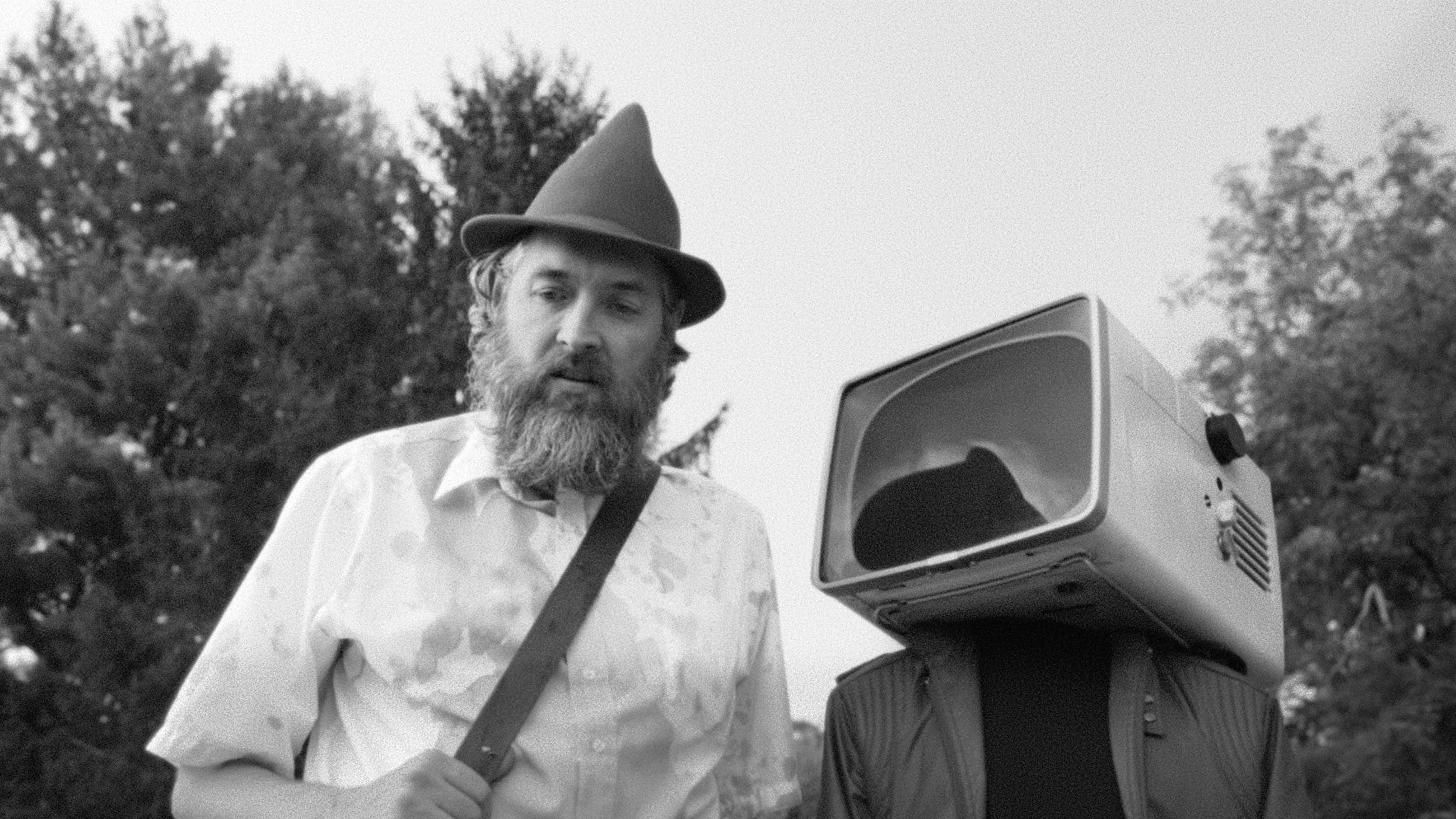
Don’t you just hate it when your video game kidnaps your dog, and you have to venture into a treacherous fantasy realm and slay the demon king in order to rescue the ol’ pup? This all too common incident is the premise of Obex, a lo-fi fantasy directed by Albert Birney that premiered at last year’s Sundance. He also stars as Conor, a recluse who spends his days immersed in a haze of pre-internet culture. It’s 1987 and outside the cicadas are buzzing; inside he’s comforted by the ever-present hum of cathode ray tubes inside his televisions and his trusty Macintosh 512K, upon which he makes a living creating ASCII art portraits.
In the pages of a personal computer magazine he spots an ad for Obex, a fantasy RPG which promises to “insert you into the game” after mailing in a videotaped interview. But the floppy disk that arrives carries more than bits and bytes: late at night, the demon king Ixaroth emerges from the computer and brings beloved dog Sandy into the world of Obex. Thus begins a reluctant hero’s journey, in which Conor will traverse a mystical medieval world with the help of an elven shopkeeper (Callie Hernandez) and a meek companion with an RCA TV for a head (Frank Mosley).
These sorts of fantasy quests are usually limited to the realm of big-budget Hollywood, but Birney makes it work with far more modest means. The costumes and special effects are as affectionately primitive as the 8-bit games of the period; the line between DIY and LARPing has never been so thin. While there are some fight scenes, Birney’s film is far more atmospheric and geared towards solitude than Dungeons & Dragons: Honor Among Thieves.
Cinematographer Pete Ohs (who also co-wrote the script with Birney) shoots Obex in an inky black and white that places fantasy and reality onto the same plane. His macro photography of the cicada brood is even more nightmarish than the demon king’s cathedral. Birney pays special attention to the mechanical workings of early digital technology: the pin-strikes of dot matrix printers, the whirring of a rewinding VHS tape. The concept for Obex arose after Birney came across the vintage computers of his childhood and friends gave him the televisions and videotapes seen in the film. (He has also created a video game, based on his pixel art film Tux and Fanny.) Remarkably, these fond recollections never sink into nostalgia.
Vibe check: Invention (2025), Eraserhead (1977), the works of Guy Maddin, Jumanji: Welcome to the Jungle (2017)
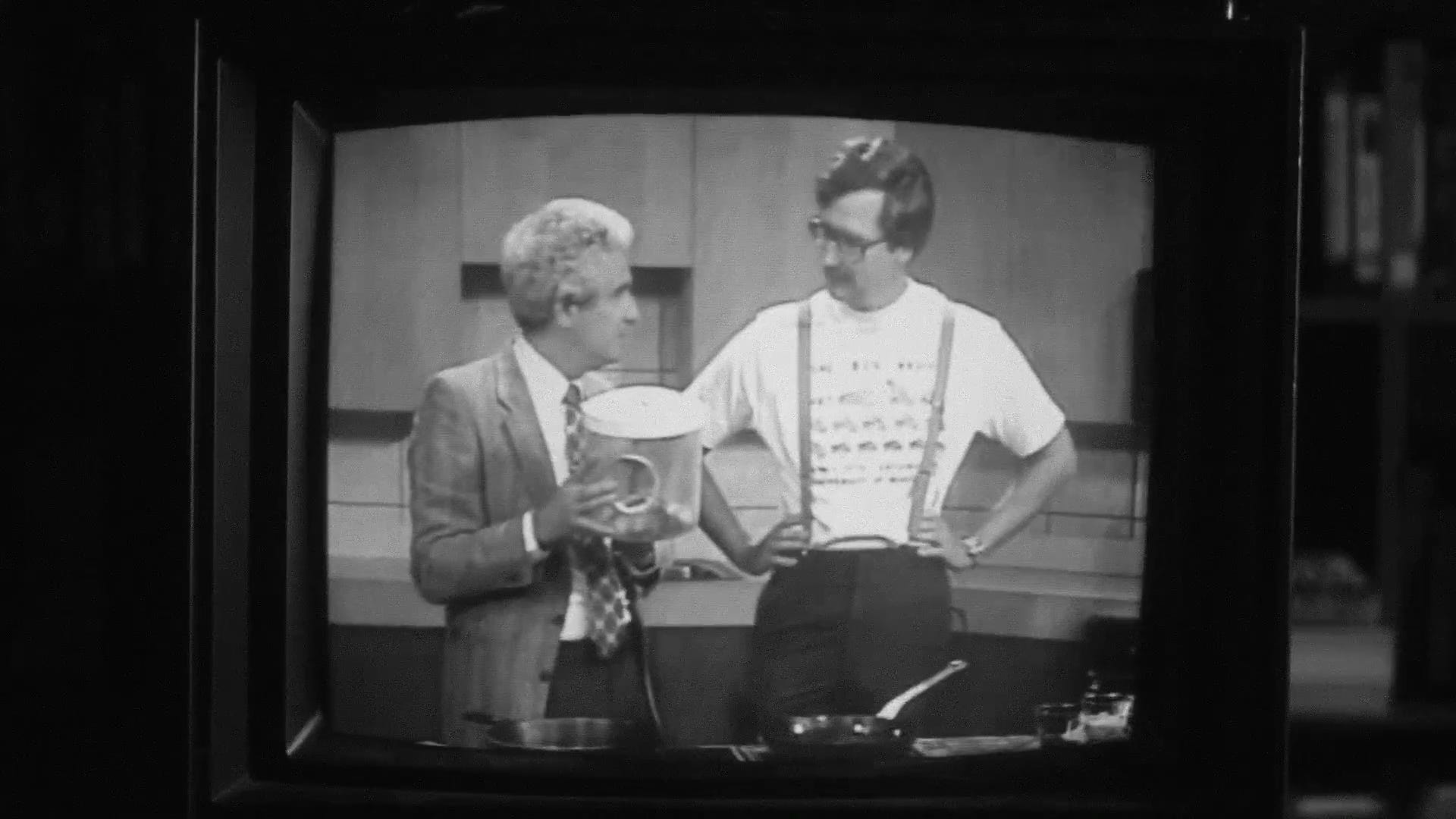
Tasting notes: While channel surfing, Conor comes across a morning show segment about cooking cicadas. The chef, entomologist Doug Miller, prepares an omelette and a pot of chili made with the insects. (Conor’s droll response: “Seventeen years in the earth and you get eaten on TV?”) I was able to find a wire article from the same year in which Miller opines, “we eat shrimp, lobster and crab. So why not insects?” As someone who ate a dehydrated butterfly last year, I’m in no position to judge.
Palestinian Oscar Contenders
Three of the films shortlisted for the Best International Feature Oscar were made by and about Palestinians. Though each is set in different time periods, all of the films in this unofficial triptych weave real-life material into their dramatized true stories so as to make their veracity unimpeachable.
Submitted for consideration by Palestine2, Palestine 36 dramatizes an uprising against the British colonial regime, with Jeremy Irons and Liam Cunningham among the international cast. I haven’t had a chance to see that one yet and release plans have yet to be announced. But I have seen the other two, which are now in theaters.
All That’s Left of You
Now playing in NY, LA, & SF, with further expansion in subsequent weeks. Click here for playdates.
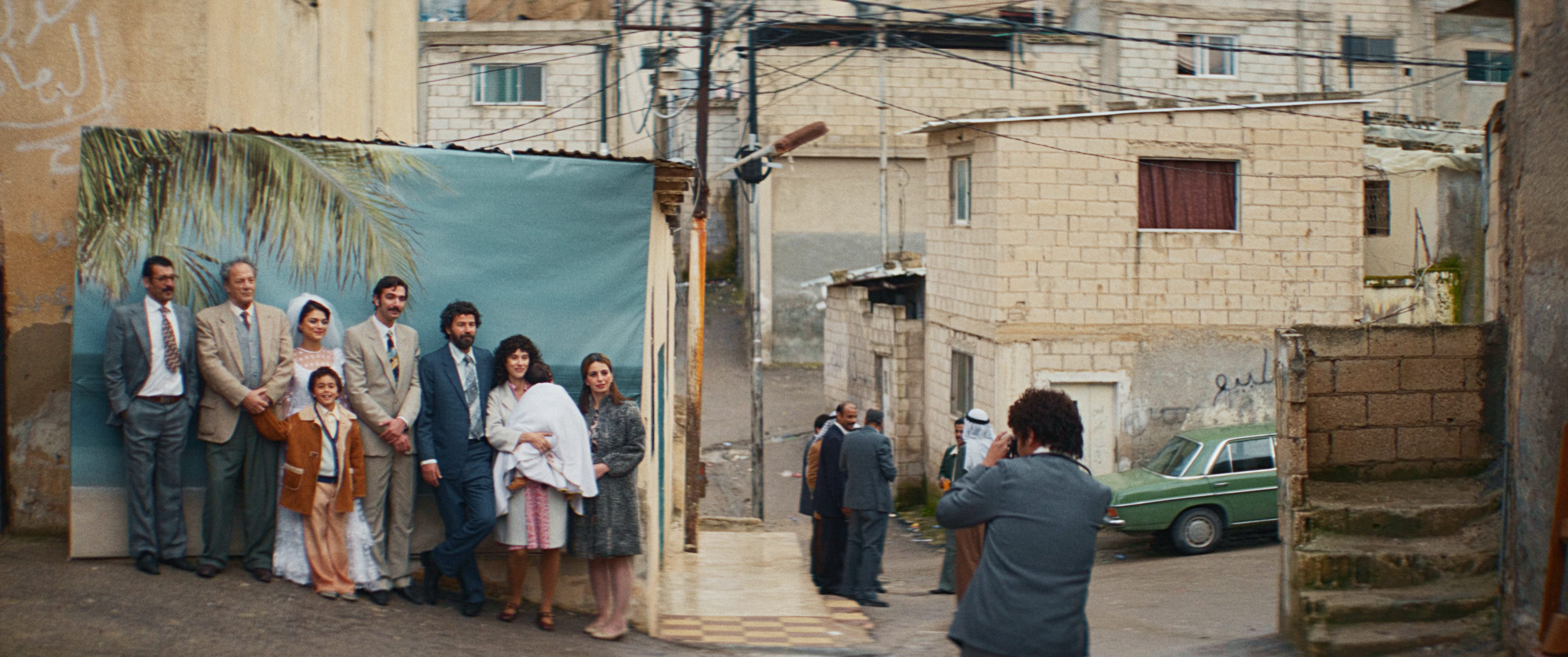
In the dusty streets of a West Bank refugee camp, a wedding celebration. The family gathers together for a portrait but the mood is bittersweet: the newlyweds are leaving the country, having secured better opportunities abroad. They’re standing in front of a backdrop depicting a tranquil beach, a sea that was once theirs but now out of reach. The camera captures their strained smiles.
Cherien Dabis covers an impressive amount of ground in this intimate epic, which begins in 1948 at the onset of the Nakba, takes us to refugee camps in 1978, and ends with a charged homecoming in 2022. Amidst this historical backdrop of occupation, Dabis focuses on one family and the emotional toll borne by each successive generation, from resignation to resistance to resilience. This is the kind of film where everything is an allegory, and the dialogue can make the characters feel more like debate participants than fully realized humans. In fairness, they’re caught in the tides of this history. It’s hard for them to focus on anything besides trying not to drown.
Given the timing of its release, it may feel like All That’s Left of You was made in direct response to the genocide in Gaza, but the film was in pre-production on October 7, 2023. (This same misfortune befell Palestine 36.) Plans to shoot in Palestine had to be scuttled, with the already-constructed period sets abandoned, and most of it was eventually filmed in Cyprus, Greece, and Jordan. (The film represents that latter country in the International Feature race.) It doesn’t feel much like the typical international co-production; classical stylings are applied in a manner similar to last year’s Brazilian drama I’m Still Here.
Tasting notes: Dabis imbues every element of her film with meaning, including in the food seen on-screen. Before their home was forcibly taken, the family was proud of their Jaffa orange groves, long a symbol of Palestinian connection to their land. One character’s favorite thing to eat is musakhan, considered the national dish of Palestine.
The Voice of Hind Rajab
Now playing in limited release. Click here for playdates.
In contrast to the other Palestine-related contenders, which were in gestation before October 7, Kaouther Ben Hania’s docudrama was made in immediate response to a particularly vicious atrocity in Gaza. (It is Tunisia’s entry in the Oscars competition.) The more one knows about the killing of five-year-old Hind Rajab by the Israeli military, the more it shocks the conscience. In this gripping and claustrophobic thriller, the events leading up to her death are recounted from the perspective of emergency dispatchers in a Red Crescent call center, who scramble to send a rescue ambulance that won’t become collateral damage.
In Ben Hania’s previous film, the documentary Four Daughters, family stories were re-enacted by a mix of actors and the subjects. A similar blurring occurs here: we hear the actual voice of Hind Rajab. It could have felt exploitative, but the use of these recordings actually avoids a different ethical issue where dramatizations usurp reality. (The production received permission from both Hind Rajab’s mother and the Red Crescent to use these recordings.)
The small cast of actors are uniformly excellent and their performances all heartbreaking. My personal standout was Amer Hlehel, as a harried manager who acknowledges the bureaucratic humiliation of having to comply with the people carrying out a genocide to save its victims.
Vibe check: The Guilty (2018)—the original Danish version, not the horrific Jake Gyllenhaal remake—and September 5 (2024)—which also highlights the helplessness of those in a position to witness atrocity without the ability to intervene, but nonetheless bear the responsibility of sharing those events to the world.
Also of Note
Quick riffs on other January movies…


Rosemead
Now playing in limited release.
I was blown away by Rosemead, an Asian American parenting drama inspired by a real-life tragedy. Lucy Liu delivers a career-best performance as a widowed mother who is increasingly concerned that her son, who struggles with mental illness, has become overly fascinated by the school shootings that have become a far too regular occurrence. The filmmaking is a quiet marvel in its craft. Written by Marilyn Fu (based on Frank Shyong’s reporting for the Los Angeles Times) and directed by Eric Lin, the film is attuned to the specificities of Asian immigrant life, where self-reliance is merely a cover story.
Though set in the San Gabriel Valley, most of the movie was shot in New York to take advantage of tax credits. There was a fascinating article in the New York Times about this phenomenon, which has interesting tidbits about the unexpected issues with matching location to setting: for instance, very few high schools in the city have locker rooms in the hallways.
The Chronology of Water
Now playing in limited release. Click here for playdates.
Based on Lidia Yuknavitch’s harrowing memoir of abuse, creation, and healing, The Chronology of Water is not at all interested in a clean narrative of triumph over trauma. It instead focuses on the persistence of memories, good and bad; the experiences that made you will always stay with you.
This is Kristen Stewart’s first spin in the director’s chair and not all goes swimmingly. The film is never wanting for style—Petra Collins must have been an inspiration—but it’s plagued by art school tropes. The constant narration and fragmented timeline are pulled from the text, but it largely distracts from Imogen Poots’s guttural performance. (I did not know she had this in her.) A character tells Lidia, “no one is big enough to contain you.” Neither can this film.
Arco
Opens January 23 in limited release.
It seems like French animation is having a little renaissance at the moment, with both this film and Little Amélie or the Character of Rain tipped to land Oscar nominations next week. Arco is a story of human optimism and adaptability amidst ecological collapse as seen through the eyes of a lonely child. Wanting to fly away is an easy desire. What is harder but more worthwhile is to wish for things to change in your present world.
It’s a bit of a tearjerker, though I myself held firm until the beautiful ending left me undone. My only critique of an otherwise perfect film is that the plot and editing are so cut to the bone that there aren’t any moments to breathe. But it’s understandable given the tight budgets for indie animation. Natalie Portman came on board as producer from the project’s earliest stages; she’s also part of the English voice cast that includes Will Ferrell, Andy Samberg, and Chris Hemsworth.
Vibe check: Princess Mononoke, The Iron Giant, Interstellar, and The Little Price. And Arco deserves to be spoken of in the same breath as those absolute heaters.
Previously Covered
I gave these films brief reviews as part of last year’s festival coverage, and now they’re coming to theaters. Below are condensed versions of those reviews.


People and Meat
Streaming on Film Movement Plus.
In Yang Jong-hyun’s dine and dash tragicomedy, a trio of indigent elders can’t afford to buy meat, owing to meagre pensions and a lack of close kin. They take matters into their own hands, dining at KBBQ restaurants across Seoul and dashing when it comes time to pay the bill. It’s fun watching them gin up different ways to skip out on the check, but in the third act, sentimentality overwhelms the picture. This reminded me a lot of How to Make Millions Before Grandma Dies, a Thai breakout that also used a fun premise to deliver a social message about how we need to treat old people better. Both of these films tug at the heartstrings, bringing many viewers to tears, but I felt nothing. This style of movie just doesn’t do it for me.
Magellan
Now playing in NY at the IFC Center & LA.
It is much welcomed to have a Filipino perspective on the Portuguese explorer (inhabited by Gael García Bernal) and his downfall at the hands of a legendary (likely mythical) tribal chief. But on the large I found the experience of watching this to be as punishing as the transcontinental voyage depicted midway through the film. Some folks I talked to after the screening found reward in the drawn out pace and painterly imagery, but with these types of durational experiences, I find them either enthralling or grueling. Magellan happens to be the latter, at least for me.
Sound of Falling
Opens January 16 in limited release.
Transcendental style with a feminist perspective. A lengthy multi-generational drama that intercuts between four women who grew up on the same farm in rural Germany, each encountering sexual violence and other hardships that draw them towards the abyss. The slow-moving pace really requires patience, and during the first half of the movie I was confounded by its cyclical rhythms. But the structure of Mascha Schilinski’s film (co-written with Louise Peter) eventually locks into place, building layer upon layer until finally, it levitates. The roving camera moves like a ghost; it’s quite akin to Steven Soderbergh’s meditative haunted house drama Presence.
Natchez
Opens January 30 in NY at Film Forum, with national rollout to follow.
A resident of Natchez, Mississippi describes his city as “a complicated little town” with a “deep, rich, peculiar history.” That history includes having once been the second-largest slave market in the United States and building its economy on plantation tourism. Suzannah Herbert’s patiently observed documentary is an artifact of late-stage Bidenism: a nation’s collective reckoning with its racist history battling against instinctual revanchism. Some of the longtime proprietors of antebellum homes seek to integrate the perspectives of the enslaved into their tours, no matter how awkwardly. Other owners either prefer the façade of escapism; a few are outright racist.
Perhaps the way forward lies outside of the plantation home. A preacher offers a different kind of tour, one that drives guests around the city to show them historical sites of enslavement, Reconstruction, and Jim Crow. One Black woman buys a property, only to discover it was once a slave dwelling. She joins the association of antebellum homeowners, becoming its first Black member, and gives tours that reveal the experiences of the enslaved.
Herbert filmed intermittently from the fall of 2022 through the summer of 2024, wrapping just months before a reactionary won back the presidency and declared a fatwa on the very concept of diversity; the film begs for a follow-up. But in capturing these duelling visions of history without demonizing anyone involved, this excellent film gives one hope that heritage isn’t hate, and that liberal democracy will rise again.
The DJ kicked off the telecast with “Style” by Taylor Swift and followed up with “Run Away With Me.” They must be a member of /r/popheads.
When it comes to the Oscar for Best International Feature Film, each country submits one film for consideration. Yes, there are big flaws with this system (sometimes a country can make multiple great movies, the selection process is beholden to government interests), but sometimes more obscure films springboard into prominence. See: the improbable nomination a few years ago for Bhutanese film Lunana: A Yak in the Classroom.