

How to Make a Turduckenstein
My recipe for a Frankensteined combination of roasted duck, chicken, and turkey.
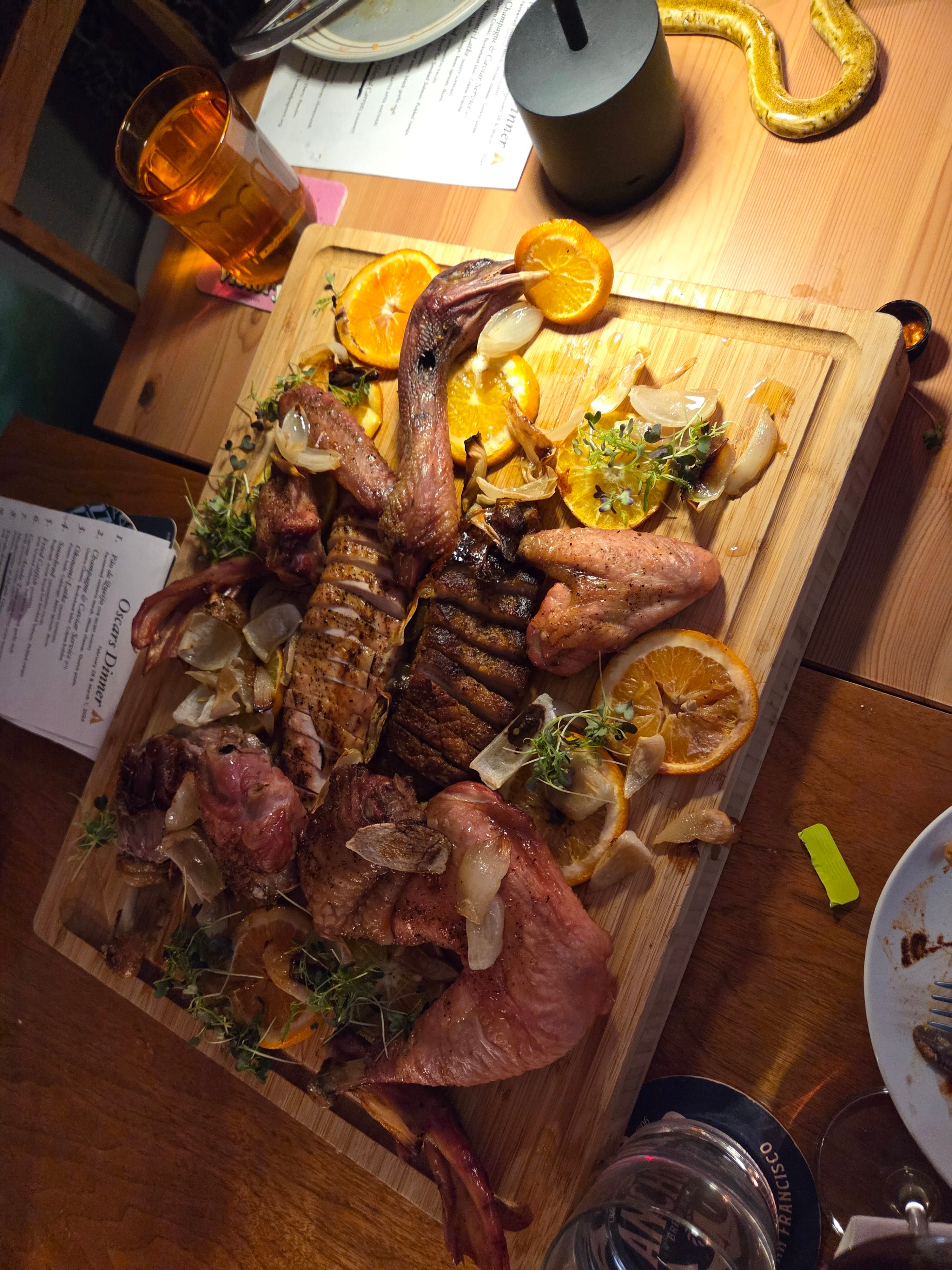
Perhaps the biggest showstopper during my ten-course Oscars dinner was what I deemed the “Turduckenstein.” It’s an assemblage of chicken, duck, and turkey, organized in the shape of the perfect creature. It is not the most optimal way to serve roasted poultry, but it looks pretty damn cool.
The dish was conceived of as a pairing with Guillermo del Toro’s adaptation of Frankenstein, which was a Best Picture nominee, but it would be right at home with any horror or gothic-themed dinner party.
It’s fairly easy to recreate if you’re experienced with roasting poultry, but it is time consuming to put everything together. For expediency, I won’t describe all the nitty-gritty; for additional context, I’ve linked to various sources throughout the instructions. (If you haven’t broken down and roasted whole poultry before, please get some reps in before putting this on your dinner menu.)
If you actually make this at any point, please send me photos!
I tried to use Substack’s new native recipe editor but it doesn’t allow for links within the instructions, and formatting options are limited, which makes it pretty useless for this specific case.
Recipe: Turduckenstein
Makes two creatures, which should be enough to feed 10-12 people as a main.
Equipment
2 half-sheet pans and wire racks
A very sharp knife for slicing
Poultry shears
Meat thermometer
Sauté pan or skillet
Ingredients
1 whole chicken (Ideally with head and feet attached. You will find this in your local Chinatown supermarket.)
1 whole duck (Ideally with head and feet attached. Alternatively, buy two duck breasts and two confited duck legs.)
2 turkey wings (Ideally cut into 3-inch pieces, but whole wings are fine.)
2 yellow or white onions
2-3 oranges of any kind (blood oranges would be cool)
Salt
Olive oil
Optional: microgreens (I like Farm One’s micro mustard greens.)
For the Cumberland sauce:
1 orange
1 lemon
1 cup Ruby port
1 12 oz jar of red currant jelly
Dijon mustard
Ground ginger
Plus:
Additional ingredients for duck leg confit, depending on which method you choose. (See below.)
Method
The day before


Break down the duck and chicken
Use poultry shears to separate the necks and feet from the carcass.
Then butcher into six parts: two each of the legs, breast halves (bone-in), and wings.
Hold on to the meaty giblets, such as heart and gizzard, as you’ll use them in the confit. Save the liver, backbones, and fat trimmings for other uses. (Duck chicharróns are incredible.)
Start the process for the counterfeit confit, which begins with an overnight “cure.” Do this to the duck legs and any meaty chicken/duck giblets (such as heart or gizzard.)
If you have the time you can do a proper duck leg confit or sous vide faux-confit, but note this takes a few days.
The morning of


Follow the counterfeit confit instructions to slow roast your duck legs, wings, and meaty offal. This will take a few hours.
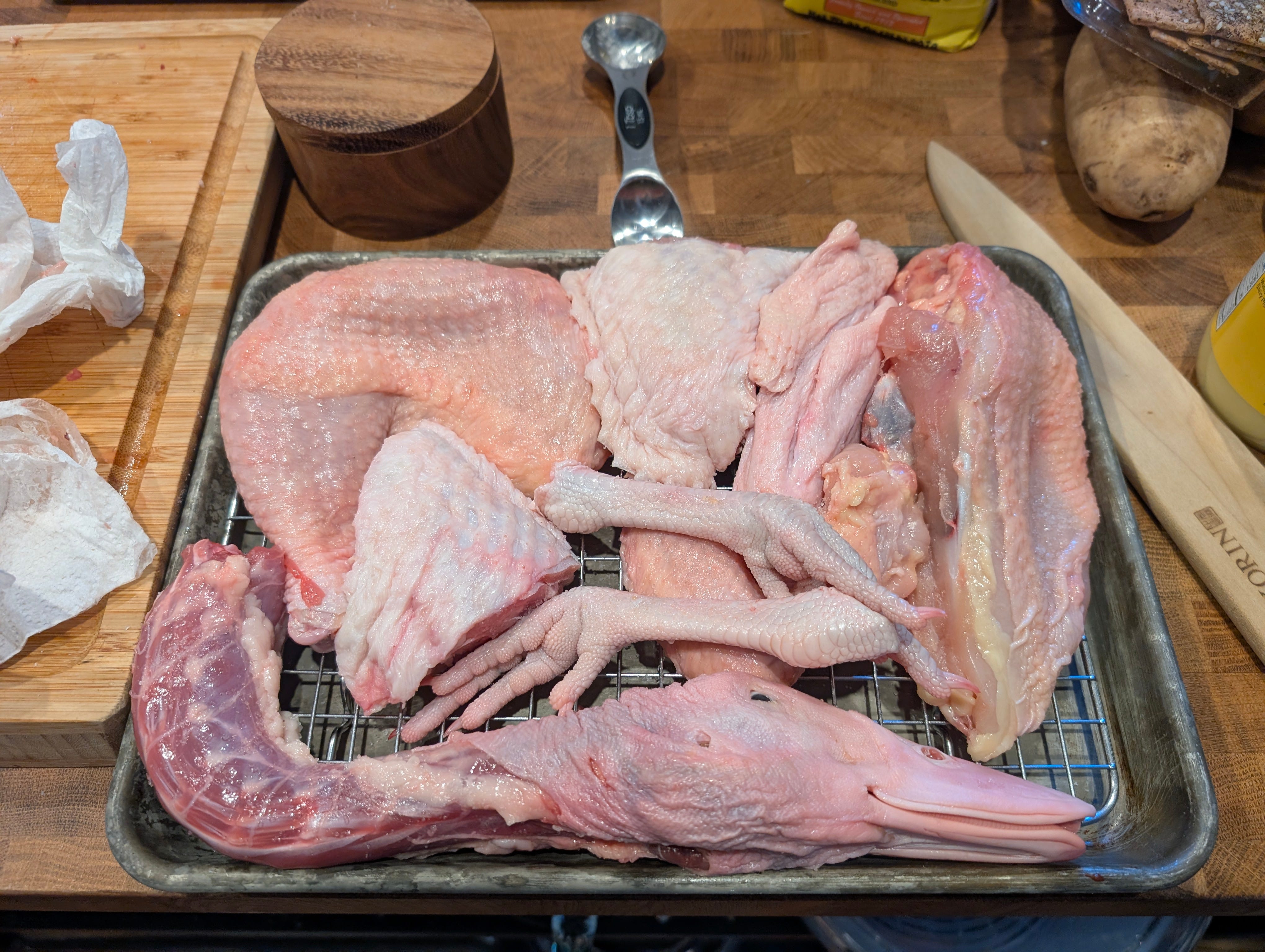
Dry brine the chicken parts, duck wings, turkey wings, heads, and feet:
Set a wire rack in a half-sheet pan, then place the aforementioned poultry parts on the rack. Scatter a generous amount of salt all around the meat. (You can use a calculator if you really want to but don’t overthink this.)
Place the pan in the fridge, uncovered. Let it hang out for at least four hours, up to twelve hours.
Score the duck breasts, following Step 1 of these instructions. Put the breasts in a container and stash in the fridge.
This is a good time to make the Cumberland sauce, but you can and should do this further in advance so you have fewer things to do today.
To evening you are serving this
Preheat your oven to 425ºF with a rack set on the top-third. Let the dry-brined poultry parts sit on the counter for 45-60 minutes so they can come up to temp.


Meanwhile, prepare your sheet pan
Slice your onions into thick slices, about 1.5 inches wide. Toss some olive oil on a sheet pan and then scatter the onions everywhere, then place a wire rack on top of the onions
Slice the oranges into rounds and place them on top of the wire rack.
On top of each citrus slice, place the poultry parts, except for the chicken breast.
Drizzle everything with olive oil.
Roast the poultry parts
Place the sheet pan in the oven, on the top-third rack.
Take the confited duck legs & giblets out of the fridge so they can warm up a bit.
After 20 minutes, take out the sheet pan. Flip the turkey wings over, drizzle with olive oil, and rotate the pan.
Set more citrus slices on the wire rack if you have any, then place your reserved chicken breast halves on them. Do the same with the confited duck legs, and duck wings. (If you’re out of orange slices, that’s fine, just place directly on the wire rack.) Drizzle these with olive oil.
Place the sheet pan back in the oven.
After 15 minutes, take out the pan and place the confited giblets, if using, on the wire rack as well.
Start checking the internal temperatures of each piece. The desired targets are below. If anything hits the target before the other pieces, remove them from the oven, set them on a cutting board, and loosely tent with foil. The entire roast should take roughly 45-60 minutes, but follow temperature, not timing.
Turkey/duck/chicken wings: 170F
Chicken breast: 155F
Chicken legs: 195F
(The duck legs are already fully cooked, so we’re just looking to warm them up and brown the skin. If needed, you can get a better crisp using a broiler or butane torch.)
Ensure everything rests for at least ten minutes.
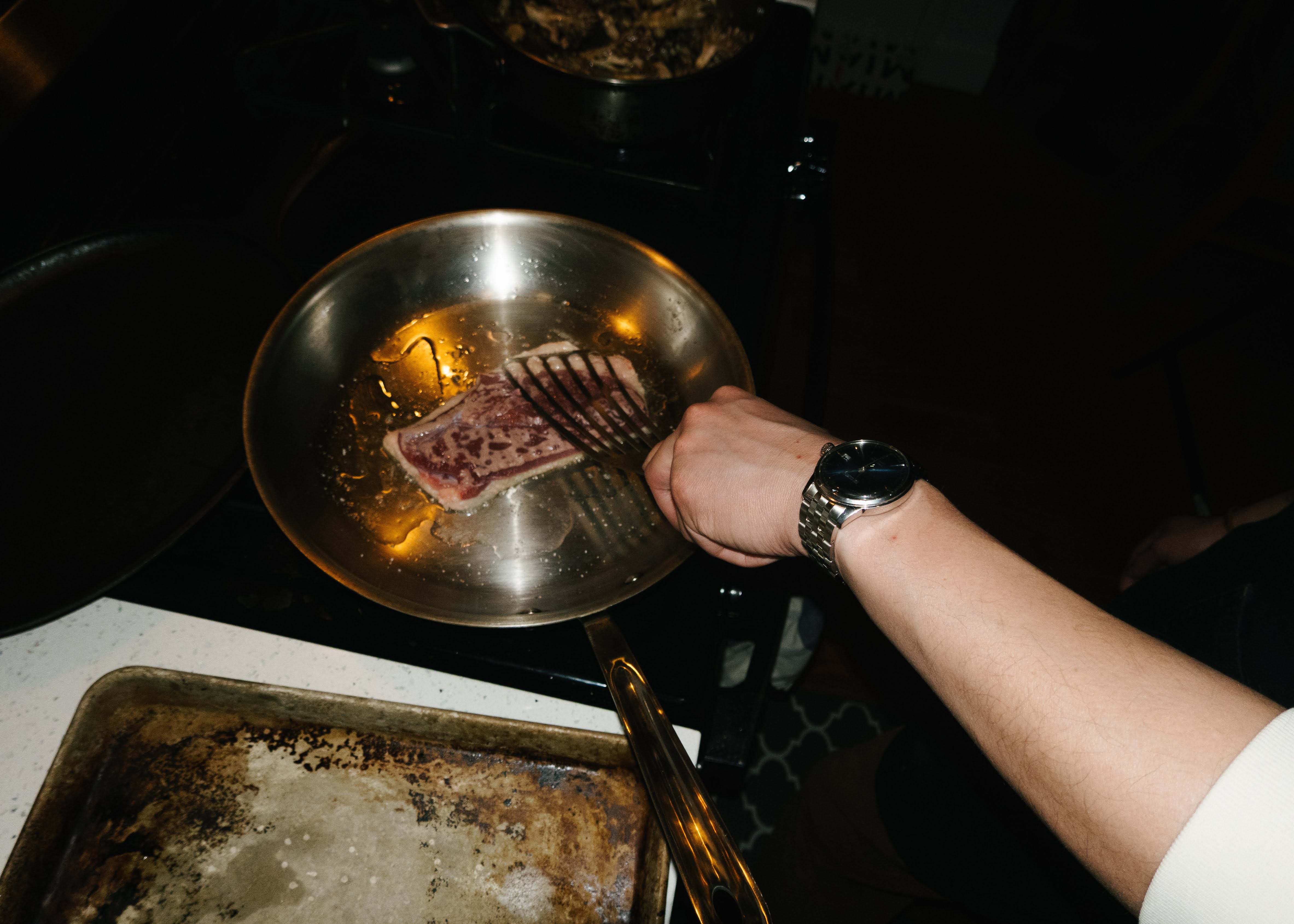
Cook the duck breast
After the giblets go in the oven, you should start cooking the duck breast on the stovetop. Follow these instructions from Steps 2-4.
If you nail the timings, this should be done roughly around the same time as the roasted poultry is finished and they can all rest together.
Warm the sauce
Meanwhile, warm up your Cumberland sauce on the stovetop, covered, over low heat.
Assemble your creature


Carve chicken breast halves from the bone.
Slice the chicken and duck breast.
Scatter the onions, now lusciously roasted in chicken fat, on a large serving board.
Place breast and legs on the board in a mismatched fashion. For example, if your chicken breast is on the left, place a duck leg underneath it.
Piece everything else—wings, offal, head, feet—together in a somewhat artful way.
I like to place the heart and gizzards in anatomically correct locations, hiding underneath the breast slices. Slide an orange slice inside the beak for some flair.
Optional garnishes: scatter microgreens and the roasted orange slices around the Turduckenstein.
Set on the table, with the warmed Cumberland sauce on the side.
This is a work of ART.