

Everything I Watched at This Year's New Directors/New Films
Demon twinks, Basque hippies, Vatican conspiracies, Lebanon archives, John Early is brat, and much more.

Last weekend saw the conclusion of New Directors/New Films, an annual festival of, ahem, new films from new directors. This collaboration between Film at Lincoln Center and the Museum of Modern Art is always a highlight on the spring movie calendar.
This year’s ND/NF lineup boasted 24 features; I had the opportunity (and, more crucially, the time) to screen ten of them, along with half of the short films1. Here’s what I thought about everything I saw, presented in no particular order.
(And if you saw anything at the festival, let me know what you thought!)
Leviticus
Opening Film. Screens April 8 & 9. Opens in theaters June 19 via Neon.
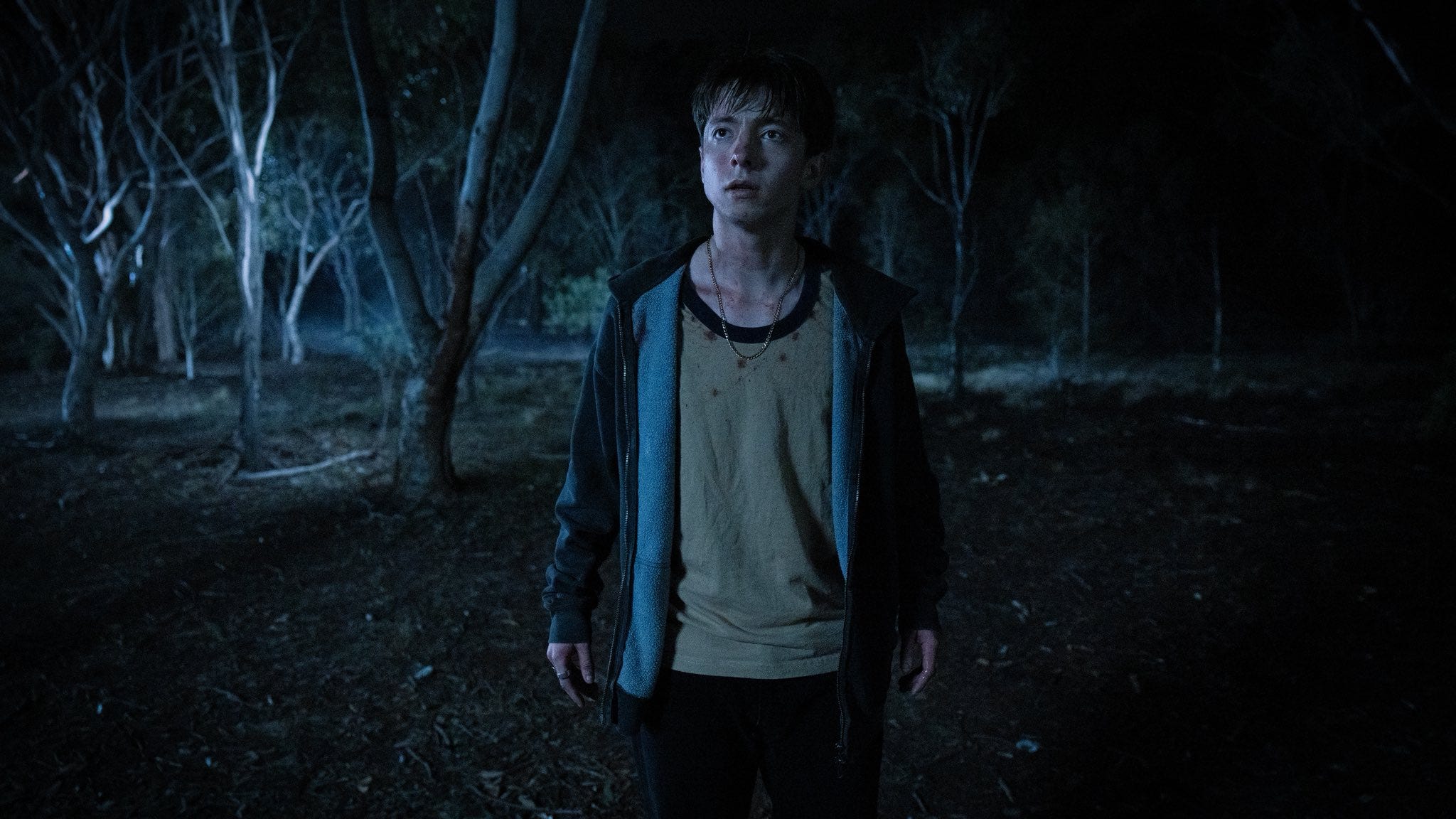
The films in this festival tend to be on the artsy side, so I was a bit surprised that this year’s Opening Film selection turned out to be a relatively straightforward horror film. This isn’t my typical thing, but I’m glad to have seen it because Adrian Chiarella has made a very effective debut feature.
The plot centers on an illicit romance between two teenage boys in an insular Australian town. Niam (Joe Bird) just moved there with his single mother (Mia Wasikowska), while Ryan (Stacy Clausen, essentially an Aussie Connor Storrie) is the pastor’s son at their fundamentalist church. Out of boredom, the two hang out in an abandoned mill, and their awkward horseplay soon morphs into a proper makeout session. When their sexualities are found out, the pair go through a strenuous exorcism. There are supernatural side effects. The Devil begins to stalk both of them, luring them in with temptation by taking the form of the person they desire most: each other. Isolated by their homophobic community, Niam and Ryan must figure out whether staying together will lead to salvation or perdition.
Chiarella doesn’t really strive to make an “elevated” horror film, which is for the best because Leviticus is genuinely frightening—and not just because of a few well-placed jump scares. Tight craft and deft motifs keep things interesting beyond surface-level thrills, and the teen romance is stark in its tenderness amidst the cruelty. Special attention is paid to the oil refineries and petrol stations lurking on the edges of this backwater down under. Hellfire doesn’t just come to the Earth’s surface. We summon it.
Aro Berria
Screens April 9 & 10. Seeking distribution.
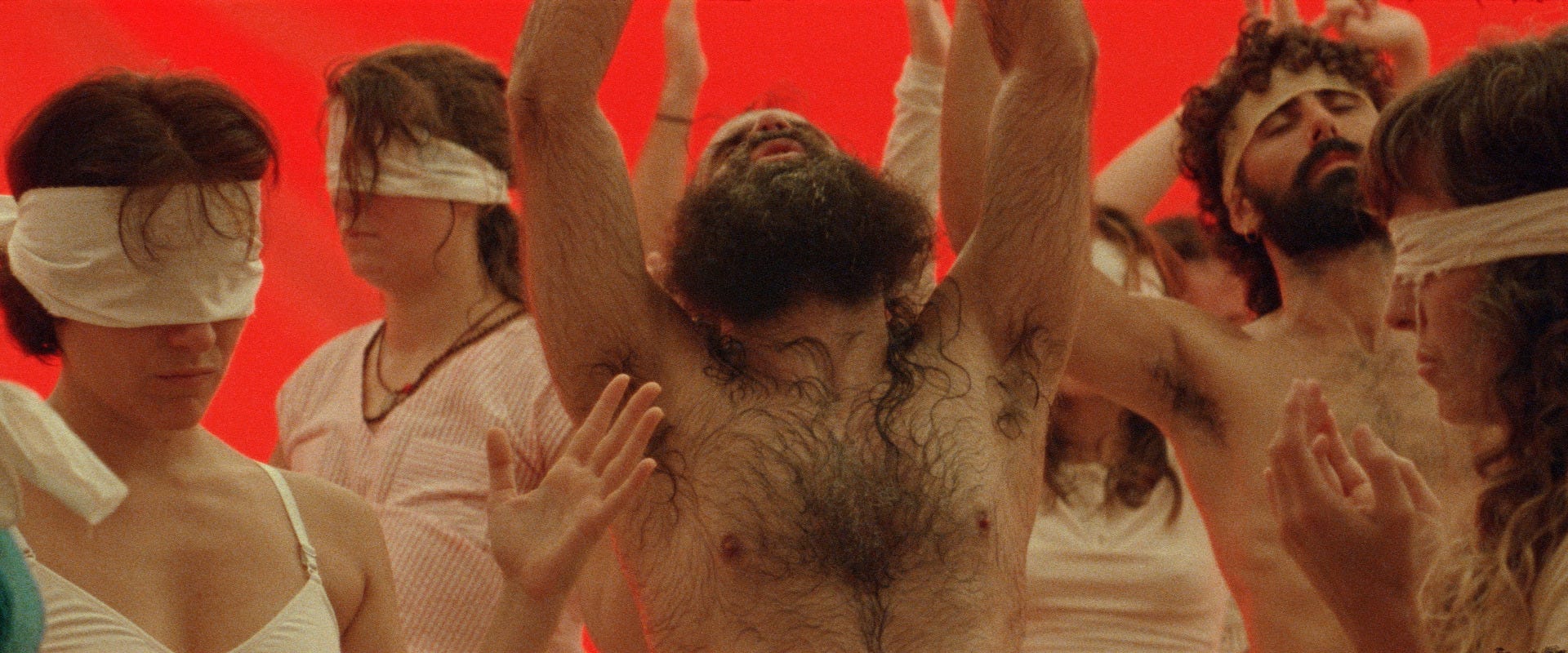
A different kind of exorcism occurs midway through Irati Gorostidi Agirretxe’s film, though to opposing ends. While the “deliverance healer” in Leviticus aims to sever his victims’ connection to their bodies, the men and women in Aro Berria seek a positive form of liberation. Set in 1978, the film tracks a group of disenchanted leftist metalworkers in the Basque Country who, dissatisfied with the latest union contract, join a hippie commune. (The title is Basque for “New Age.”) Blindfolded in a windowless, orange-painted room, the converts engage in esoteric dances, sustained floor writhing, and what appears to be a version of primal scream therapy. This sequence lasts ten excruciating minutes, and there’s more where that came from.
Aro Berria is more or less a reenactment of a real-life community’s practices, and Gorostidi successfully conjures the spirit of a bygone era. (Photographs from the actual commune are displayed over the end credits.) But to me, the experience was more akin to witnessing a cult indoctrination. My overriding thought was that leftists aren’t taken seriously because they do weird stuff like this. All of which is to say this film was really not for me, though I did take pleasure in the sun-dappled cinematography during the outdoor scenes. How wonderful it would be, Basque-ing in a perpetual golden hour.
Two Mountains Weighing Down My Chest
Screens April 18 & 19. Seeking distribution.

I had just finished watching Aro Berria before launching into this next film, so I shuddered when it began with a depiction of a European hippie summer camp. Fortunately, the happenings were not nearly as esoteric and it was but one part of an artist’s globe-spanning quest to find community.
Born in Beijing and based in Berlin, filmmaker and artist Viv Li is the kind of global citizen who struggles to find the place where she truly belongs. Back home, she bristles at her family’s traditional attitudes. (There’s an amusing moment where Li’s aunt is convinced that the United States created the virus to weaken China, a mirror image of American’s homespun conspiracy theories.) The art scene in Europe is accepting, particularly when it comes to her queer identity and vegan diet, but she discovers cultural assimilation is a one-sided affair. During a trip to New York to see friends, she vents her frustrations with loneliness, with a brief moment of catharsis at the top of Luna Park’s ferris wheel.
This sort of self-reflexive documentary is by definition navel-gazing, but Li approaches the material with aplomb, playfully cutting across locales in a way that mirrors her own internal whiplash. It helps that the filmmaker herself is such a charming subject. Aided by an amiable soundtrack of German and Chinese pop music, Two Mountains Weighing Down My Chest feels like we’re directly tapping into its maker’s stream of consciousness. The film ends without a tidy resolution, but she comes away with a better understanding of her two cultures. Comparing the West to China, she observes, “We’re both brainwashed, but in different ways.”
Chronovisor
Screens April 10 & 11. Opens in theaters this fall via Grasshopper Film.
In 1972, Father Pellegrino Ernetti, a Benedictine monk and respected musicologist, announced the existence of the Chronovisor, a machine that allows its user to view an objective record of anything that has ever happened. (The idea is that everything we do emits particles, and thanks to the law of conservation of energy, the Chronovisor recovers signals from the ether.) His claim to have witnessed the resurrection of Jesus Christ through this device caused a stir in the Italian press. But the scant proof provided was swiftly debunked. The Chronovisor was sealed in Vatican archives; its creator would die in obscurity, decades later.
In 2026, Columbia philosophy professor Béatrice Courte (Anne-Laure Sellier, a real-life academic) comes across a brief mention of Ernetti and his Chronovisor. Intrigued, she launches into a line of scholarly inquiry that comes to consume her. The Chronovisor was dismissed as a fraud, its inventor along with it. But what if it actually worked and the Vatican, afraid of the implications of laypeople learning the truth behind the Bible, orchestrated a cover up?
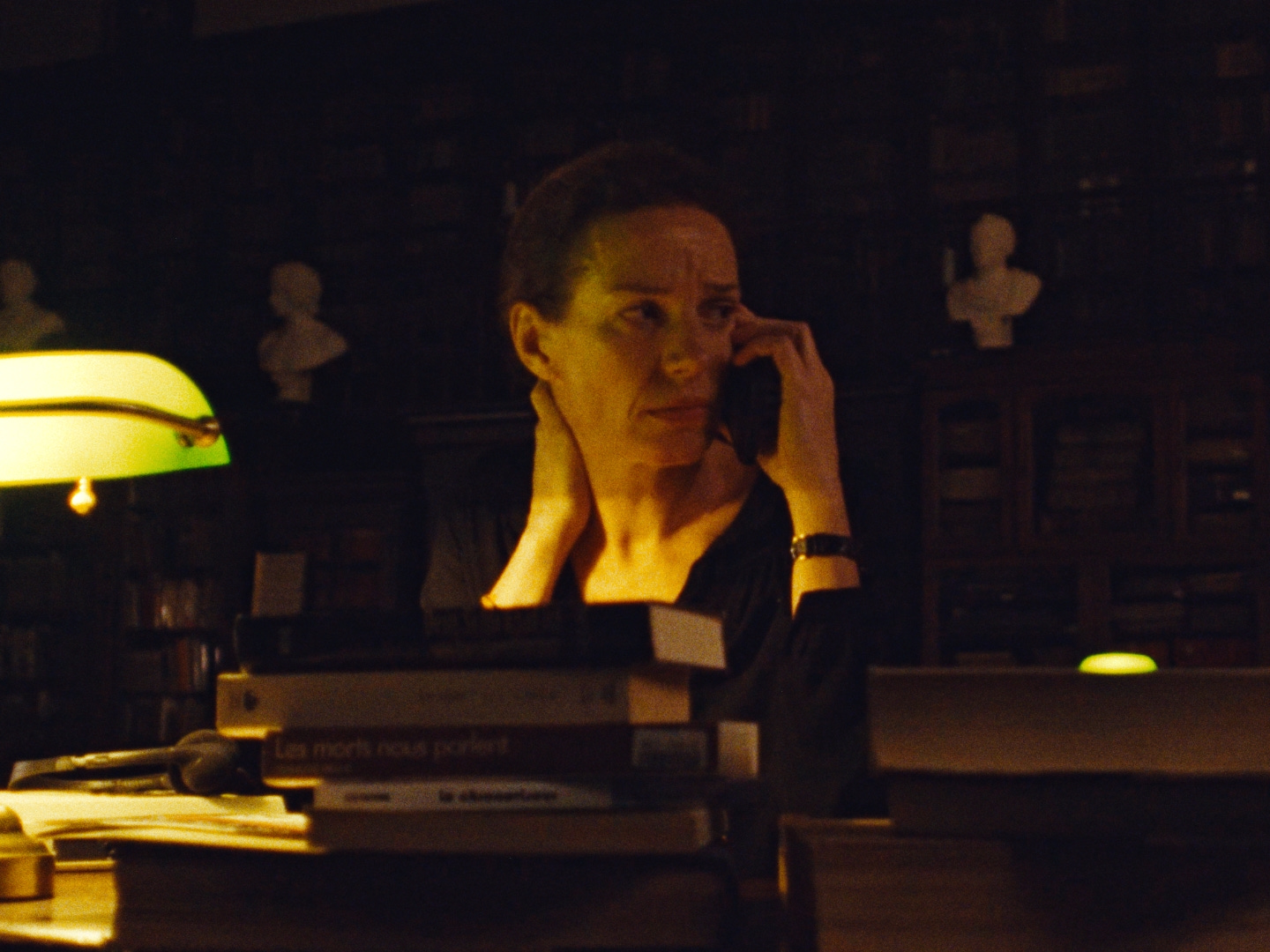
While the premise could be right at home with The Da Vinci Code and Angels & Demons, what directors Kevin Walker and Jack Auen have to offer is not a globe-trotting pulp thriller starring Tom Hanks. Its adventurousness lies in its formal technique: it is a deskbound, lo-fi conspiracy thriller in which the viewer watches Béatrice read a bunch of old academic journals in beautiful private libraries and her well-appointed East Side apartment. It is one of the most compelling movies I’ve seen this year. I’m still trying to figure out what alchemy the directors were doing to make it so.
As we read alongside Béatrice, we hear excerpts from Gustav Holst’s orchestral suite The Planets, which turns her research process into a grand voyage2. The archival material—books, journals, magazines—spans multiple languages; English translations are superimposed over the text to highlight relevant information. I figured that these were expertly fabricated, but it turns out that nearly all of them are authentic and the result of original research on the part of the filmmakers. Chronovisor is, at once, an ode to the tactility of analog media and the bleary frenzy of the late-night internet rabbit hole—all based on a real conspiracy.
This was by far the best movie I’ve seen at ND/NF and I haven’t stopped talking about it! The festival screenings have already passed (sorry) but New Yorkers have another opportunity to see it before the fall release! It’ll be playing at Anthology Film Archives on May 2, as part of Prismatic Ground, with a director Q&A. Anthology reminds me of some of the old buildings at my old college. It’s kind of the perfect venue for this film. Tickets here.
Maddie’s Secret
Screens April 12 & 13. Opens in theaters June 19 via Magnolia Pictures. Filmmaker John Early has curated a repertory series at Metrograph: Thrust It!: The Films That Inspired Maddie’s Secret.

I’m always skeptical when an actor jumps into the director’s chair for the first time. The results too often betray a loose grasp of cinematic grammar. Even worse, sometimes they are merely a vanity showcase. Fortunately, John Early’s satirical melodrama is an exception. In addition to writing and directing Maddie’s Secret, he also stars in the titular role in drag, which is never remarked upon within the world of the film. The initial chuckles during my screening quickly faded once everyone realized that Early’s performance was meant to be taken seriously if not literally.
At the beginning of the film, Maddie is a lowly dishwasher at the test kitchen for a Condé Nast food brand. (It is, of course, a thinly veiled stand-in for Bon Appétit.) Although she struggles to be noticed at work, she has a best friend alongside her in the dish pit (Kate Berlant) and a loving husband (Eric Rahill) to come home to. After a video about an eggplant omelette smashburger launches her into social media stardom, the disruption to her routine triggers a relapse of her childhood eating disorder. Maddie ends up having quite a few secrets to keep.
Early nails his parody of the 1990s “movie of the week,” complete with a cheesy muzak score and soft fill lighting, but the film flattens when it crosses into reverent homage. Coming to the rescue during those moments are well-deployed supporting players, including Berlant as the toxically co-dependent BFF and Conner O’Malley in the role of a horndog creative director.
Tasting Notes: You bet I started taking copious notes of all the dishes in the film. I’ll try to write a bit more about this for the theatrical release, but the most underrated satirical element has to do with Maddie’s signature style: a Californian riff (or ripoff) of Asian cuisines3. Let’s see if I can reverse-engineer her eggplant omelette vegetarian smashburger, which is based on the Filipino dish Tortang Talong.
And of course, there’s fertile ground with unpacking the irony of being a food influencer who has to stay in shape for the camera. A bit different situation but my mind went to Pete Wells having to reset his eating habits after stepping down as the restaurant critic at the New York Times.
Erupcja
Screens April 11 & 12. Now playing in NY & LA via 1-2 Special, with further expansion to follow.
Reviewed in a separate post, in case you missed it:
Best Laid Plans, Gone Awry

One is a French New Wave/mumblecore indie that stars Charli XCX. The other is a documentary that follows avant-garde theater director Robert Wilson as he embarks on an ambitious project. In addition to sharing a 1.33:1 aspect ratio, both feature a man whose grand plans are waylaid by extenuating circumstances.
Two Seasons, Two Strangers
Screens April 17 & 19. Opens in NY at Metrograph April 24 via Several Futures.
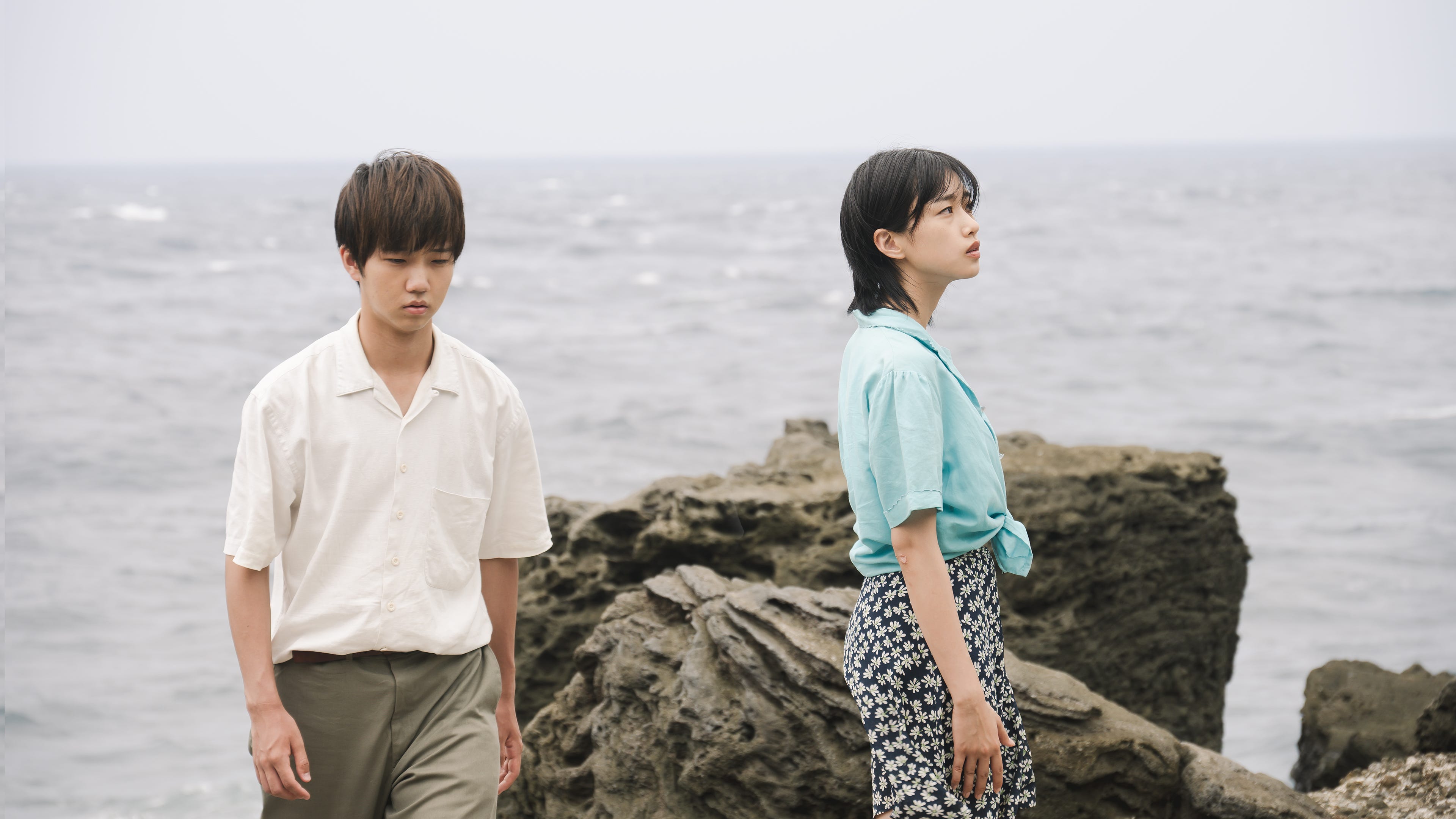
One would think that the definitions of “new directors” and “new films” would be straightforward, but as far as this festival is concerned, they appear to be quite malleable. Sho Miyake isn’t a particularly new director: four years ago, his film Small, Slow but Steady was programmed at this very festival. (It’s a lovely movie that is true to its title.) Two Seasons, Two Strangers is his fifth feature overall. And the contours of its bifurcated narrative—two strangers traveling to isolated locales in a futile attempt to outrun their melancholy—are pretty much the same as The Height of the Coconut Trees, which screened at last year’s edition of ND/NF. In that sense, this is not a particularly new film either.
This pedantry wouldn’t matter if Two Seasons, Two Strangers were a better film. Adapted from two of Yoshiharu Tsuge’s manga, the story begins in a dilapidated fishing village, with a beachside meet-cute between a young man and a young woman who bond over their respective sadnesses. Then comes a narrative beat switch. Struggling with writer’s block, a Korea-born screenwriter escapes to snowy Hokkaido, where a stay with an isolated innkeeper rejuvenates her creative practice while reframing her perspective. These twinned tales of solitude contain plenty of potential, but it never quite achieves the resonance they deserve.
Despite these shortcomings, the gorgeous cinematography is an undeniable virtue. Framed in the square-ish Academy ratio, the recurring multiplanar landscape shots belie the smallness of human drama when set against the heights of mountains and the vastness of the sea. It’s in these moments that Miyake’s film, to borrow the title of his previous work, is small, slow, but steady.
Brand New Landscape
Screens April 15 & 16. Seeking distribution.
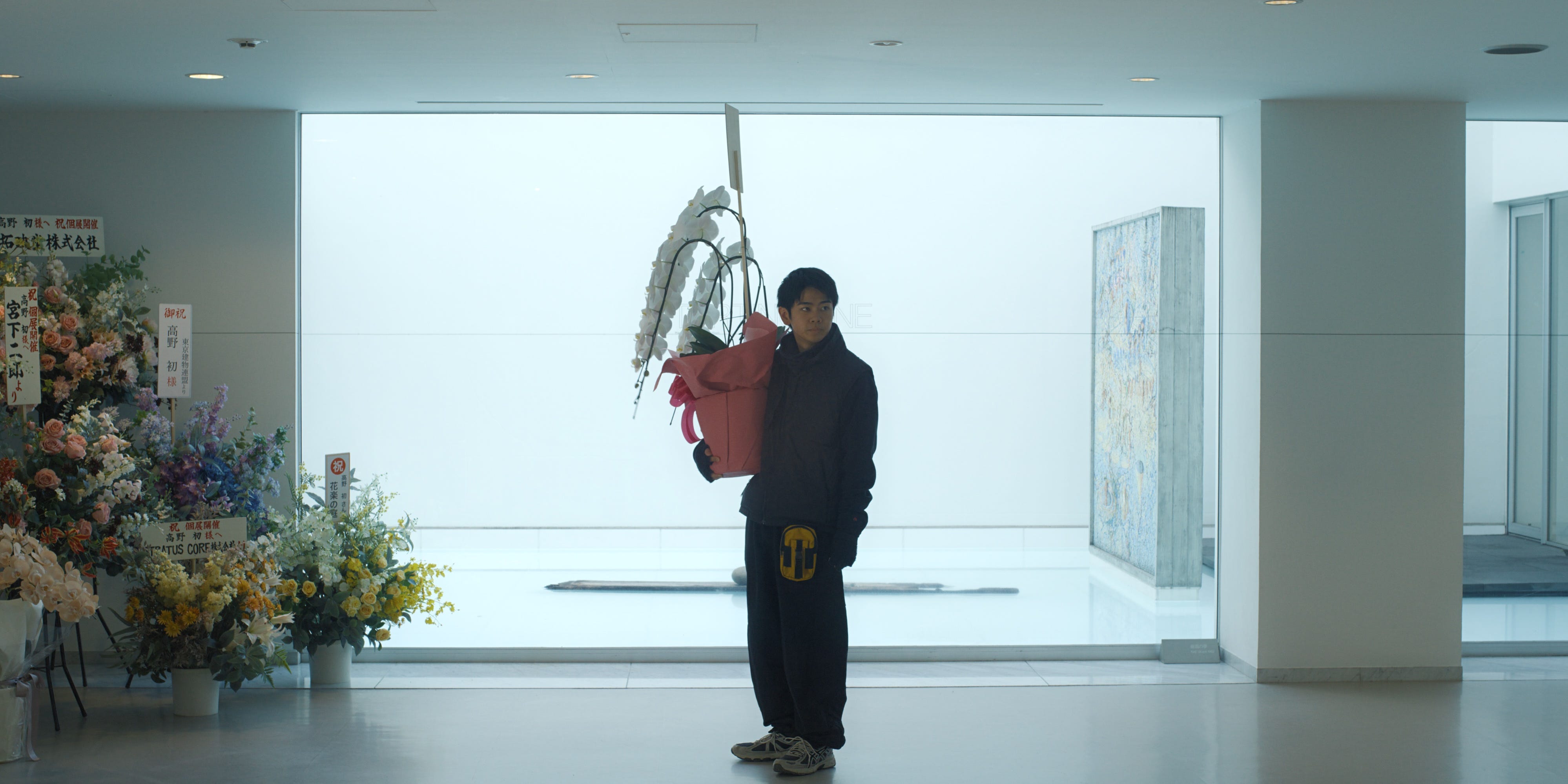
Yuiga Danzuka’s quietly ambitious debut uses the story of a fractured family to explore the alienation and displacement wrought in the name of urban renewal, as well as the coincidences and contradictions essential to life in a big city. A chance encounter between workaholic architect Hajime (Kenichi Endo) and his estranged son Ren (Kodai Kurosaki) resurfaces their long-suppressed grievances, while also giving Ren the opportunity to reconnect with his distant sister (Mai Kiryu).
Hajime has returned to Tokyo to spearhead a controversial redevelopment project that would force out the area’s unhoused population, in an echo of his star-making work designing Miyashita Park, a shopping complex in Shibuya. Danzuka inserts archival footage of the homeless encampments that used to be there. (I’ve been to Miyashita Park. Admittedly, it’s very nice.) It’s an inspired intervention, if incomplete in execution. Hajime is a fictional character, and the family drama doesn’t quite connect to how the twinning of contemporary architecture and capitalism has led to the domestic space becoming as transactional as the built environment. This only really comes together at the very end, when Danzuka makes an onscreen dedication: “In memory of my mother and the city.”
If On a Winter’s Night
Screens April 14 & 15. Seeking distribution.
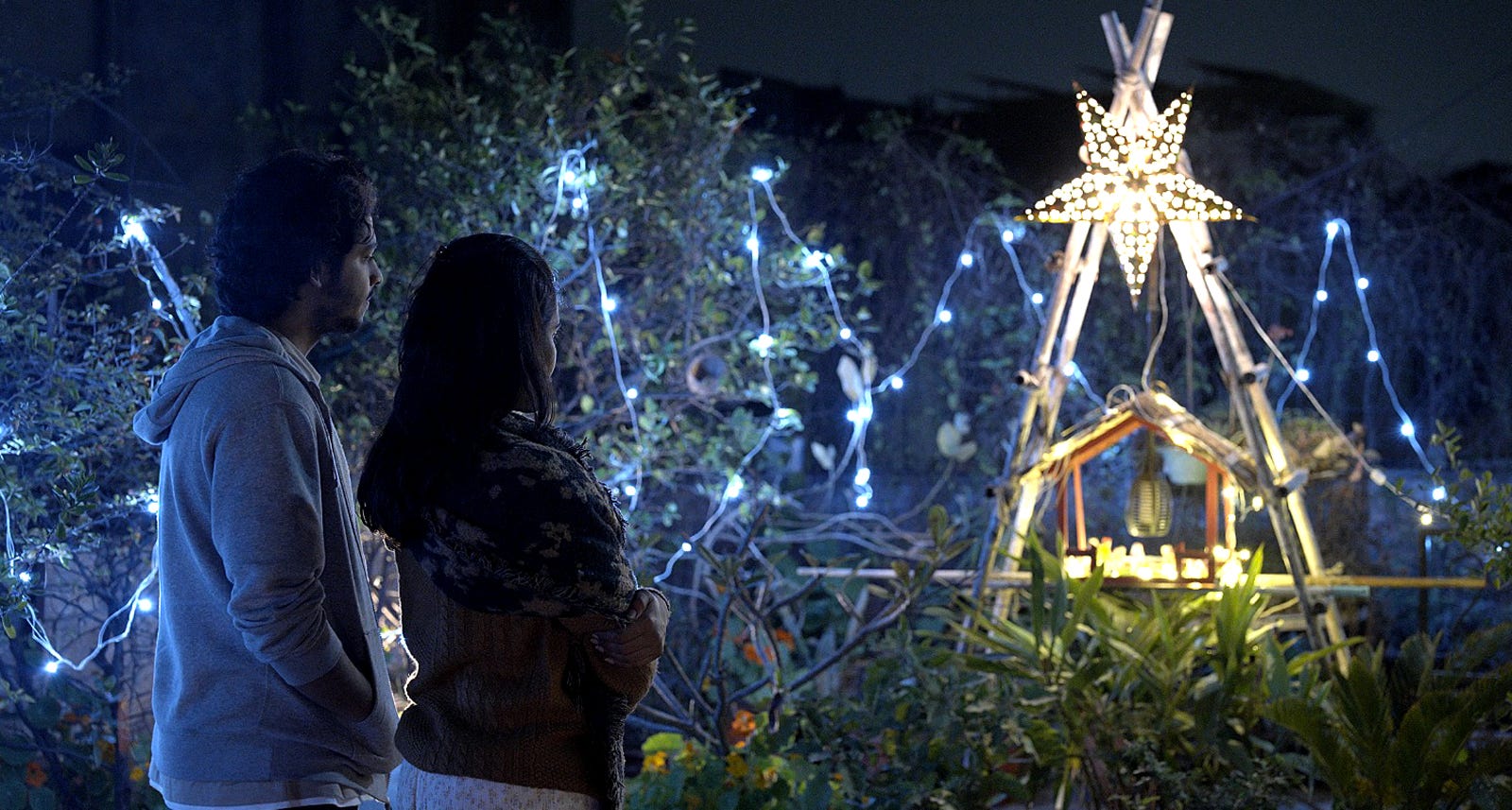
Urban alienation is also the subject of this Delhi-set neorealist drama by Sanju Surendran, though here the causes are India’s hierarchical society and economic precarity. A young couple, both artistic strivers, have migrated from Kerala to Delhi in search of better opportunities. They soon find that the language barrier between Malayalam and Hindi is the least of their problems.
The premise is very similar to All We Imagine as Light, and its director Payal Kapadia is an executive producer on this project. While it’s great that her majestic film seems to have inspired a new generation of Indian filmmakers, the comparison does not work in Surendran’s favor. Quoting the title of Italo Calvino’s most famous work for this film’s English-language name suggests a playful postmodernism that simply isn’t there. More descriptive is the original title, Khidki Gaav, which is simply the name of the South Delhi neighborhood where the film is set. Surendran has a keen observational eye, but the overly listless pacing hampers what ought to have been a more propulsive story.
Do You Love Me
Screens April 10 & 11. Release plans TBA by Icarus Films.
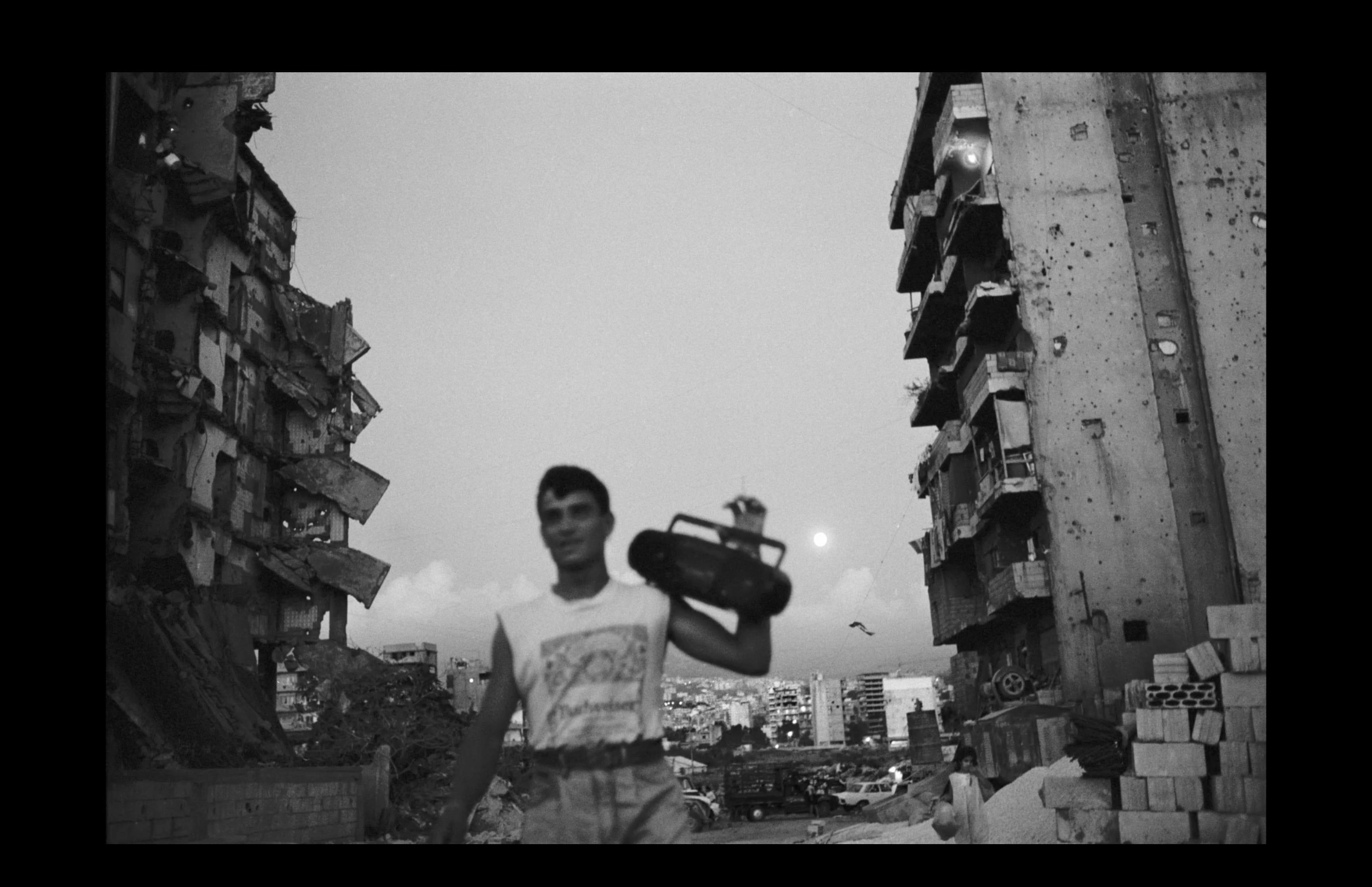
A note at the beginning of Lana Daher’s non-chronological essay film cautions that its mixture of disparate works may confuse the viewer. But “this disorientation is part of the journey. Welcome to Lebanon.” Built from 150 fragments of existing media—including film, music, and found footage—this history of life in Daher’s home country is a feat of archival research not unlike the journey undertaken by the directors of Chronovisor.
Working with editor Qutaiba Barhamji, Daher intermixes scenes from documentary and narrative cinema across the past 70 years, with each sequence interrogating different tropes in Lebanese media. The cumulative effect is a portrait of how entrenched conflicts in the Middle East and sectarian divisions in Lebanese society have affected ordinary living. In Beirut, time and history don’t exist in a linear fashion. It loops and loops, constantly threatening to collapse in on itself. That Do You Love Me had its New York premiere amidst Israel’s relentless bombing of Lebanon only underscored this destructive cycle.
Daher leans heavily on nostalgic music, and it’s highly effective. One memorable sequence is soundtracked by “Monday, Tuesday... Laissez-moi danser,” a French-language disco song from 1979 that was a huge hit in Lebanon. “Day after day, life slips away… / Let me dance, sing freely all summer.” Juxtaposed against scenes of destruction and displacement, the joyous tune becomes a song of resistance.
This was the only public ND/NF screening I managed to attend this year. Given the political situation, the audience was eager to receive this film. There was a sustained standing ovation for Daher after the Q&A. The director noted that during the recent premiere in Beirut, the audience could hear an Israeli drone buzzing. At first, she thought it was a sound effect she forgot she had added, and thought it was a smart choice. Then she realized the border between cinema and reality was more porous than she imagined.
Can I make a confession: On my way to the theater, the breakdown of “Straight Up” by Paula Abdul got stuck in my head. (“A-do, do you love me? / A-do, do you love me, baby?”) I wondered if this song would appear in the film, but I can report that it does not. (For starters, Abdul is not Lebanese, but of Syrian Jewish descent.) Rather, the film’s title is taken from a 1978 pop classic by the Bendaly Family, the chorus of which was recently interpolated by Palestinian singer and rapper Saint Levant. The “you” in “Do you love me?” may be Beirut itself, or the wider world.
Shorts Programs I & II


And last but not least, a quick word on the short films programmed at New Directors/New Films, half of which were made available to critics. Somewhat surprisingly, most of these were more plot-driven than I’ve come to expect from this festival.
The mundane aftereffects of institutional cruelty are captured in Division (directed by James Paul Dallas), a brief documentary in which the filmmaker helps an absent friend pack up his apartment over video chat. Revealing the reason is saved for the very end.
I haven’t seen much of the What We Do in the Shadows TV series but apparently it’s quite gay. Those looking for more of the same should seek out Time to Go (Renzo Cozza), a surprisingly sweet sketch about a vampire in Argentina who meets a nice guy and begins to doubt the ethics of killing his Grindr hookups for their blood.
While I admired the punk sensibility of Unleaded 95 (Emma Hütt and Tina Muffler), in which a trio of German sapphics fight, fuck, and fuss on the day of a bachelorette party, the short felt like it was straining to be a longer feature.
My favorite of what I watched was Taxi Moto (Gaël Kamilindi), a tenderly metafictional fantasia. After a filmmaker has a shoot in his native Rwanda suddenly cancelled due to its gay subject matter, he pivots to film the script in Paris. He meets a prospective actor and the two spend the day walking and talking. They discuss the precarity of queer life in Africa, the balance between compromise and censorship, and the friction of a storyteller returning from the diaspora. Reminiscent of Before Sunrise, the vibes are strong—the 16mm cinematography is lovingly gauzy—and so are the ideas being advanced.
The most directly personal short of this bunch was Buckskin (Mars Verrone), a tribute and testament to the filmmaker’s grandfather, the first Black man to join the U.S. Forest Service. Though technically a documentary, there are no traditional talking heads. Instead, Verrone points the camera at his weathered hands, the Forest Service mug that has accompanied him to the twilight of his life. Avant-garde interventions take the form of archival clippings superimposed over serene shots of Californian redwoods. While her grandfather muses on what we leave behind for future generations, both on a familial and global scale, Verrone takes note of the fallibility of memory in old age.
This was supposed to go up before the festival began but life got in the way, so it’s now an end of fest report.
What phone calls do I need to make for the New York Philharmonic to organize a “live to screen” performance?
Wait, is this fucking play about us?” – Alison Roman, probably.
Loved your review of Chronovisor. I also enjoyed Erupcja and found your insights regarding some of its shortcomings to resonate with me.