

Secondhand Serenade
In “Power Ballad,” Irish realism and Hollywood fantasia clash.
I’m generally a fan of John Carney’s music-driven movies. Sing Street is one of my favorite movies of all time, and one need not opine about the lightning in a bottle that is Sundance breakout Once. His films are familiar but comforting, but his newest one misses the mark despite the star power of Paul Rudd and Nick Jonas.
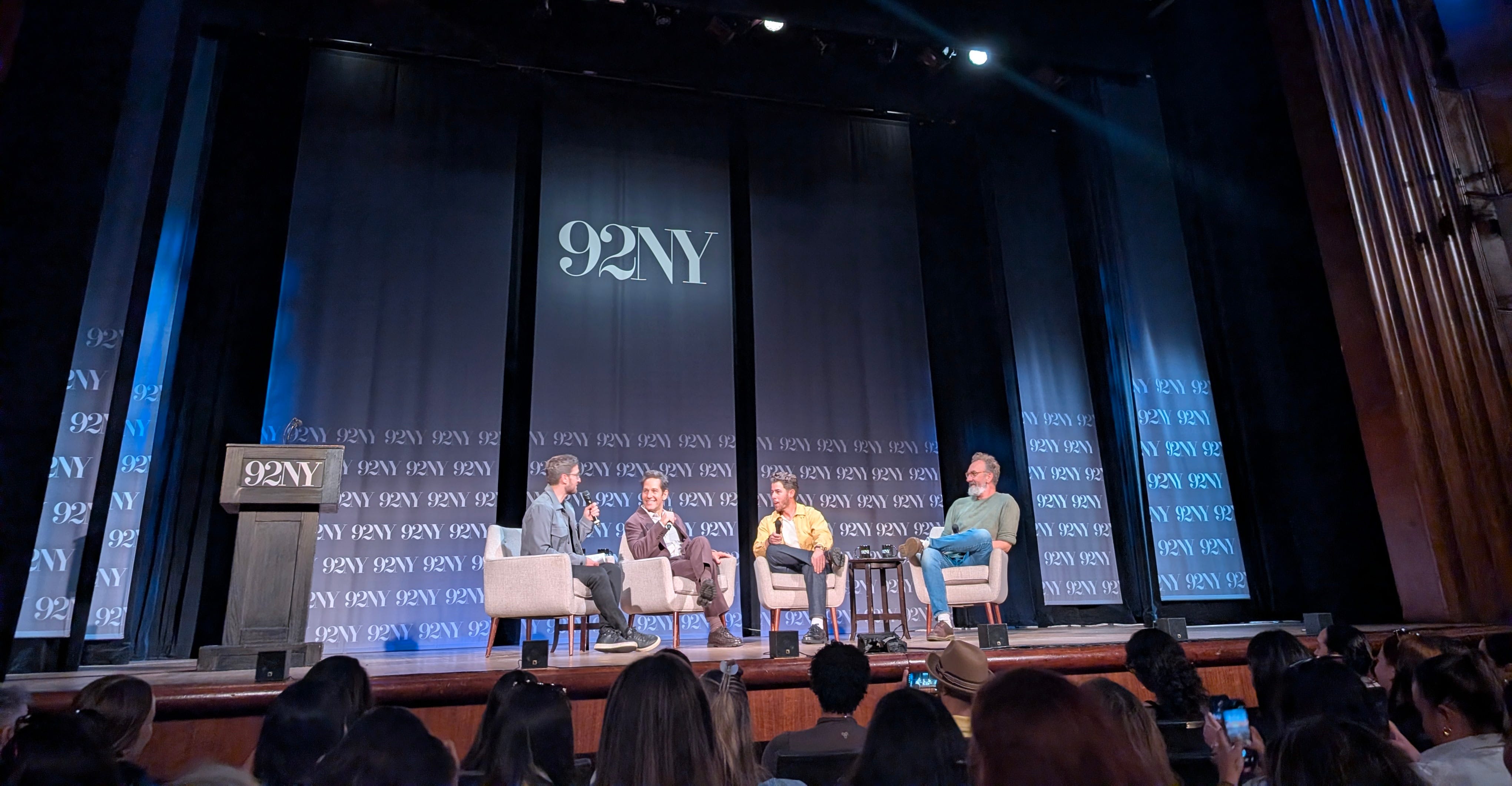
Power Ballad has been out for a couple weeks now, but a month ago I had the opportunity to attend a pre-release screening where the director and stars did a Q&A. That was quite fun but it didn’t affect my opinion of the film itself. My review ended up a bit long because films that show glimmers of being good are interesting to work through and write about.

Also: this weekend sees the theatrical release of Karla Murthy’s documentary The Gas Station Attendant, in which the director retraces her relationship with her immigrant father. It’s a moving personal essay built upon a mix of home movies, recorded phone calls, and an impressive set of file footage. I covered it as part of DOC NYC last year; you can read my review here. The film plays at DCTV Firehouse Cinema in New York with Q&As throughout the week, with screenings in Houston, Austin, and San Francisco later this month.
Power Ballad
Now playing in wide release.
Across four films over the past two decades, musician-turned-filmmaker John Carney has been telling the same story. Once, Begin Again, Sing Street, Flora and Son: all concern a working-class Dubliner (or Englishwoman, in one instance) who writes songs on their guitar and finds the collaborative act of making music to be a far greater reward than fame and fortune. Above all, these films advance an unyielding belief in the power of a song to change lives1. This may feel formulaic, but I’m not opposed when they consistently hit the right notes. In a way, Carney is the Haruki Murakami of music-driven indie dramas. His newest film, Power Ballad, is the first to falter.
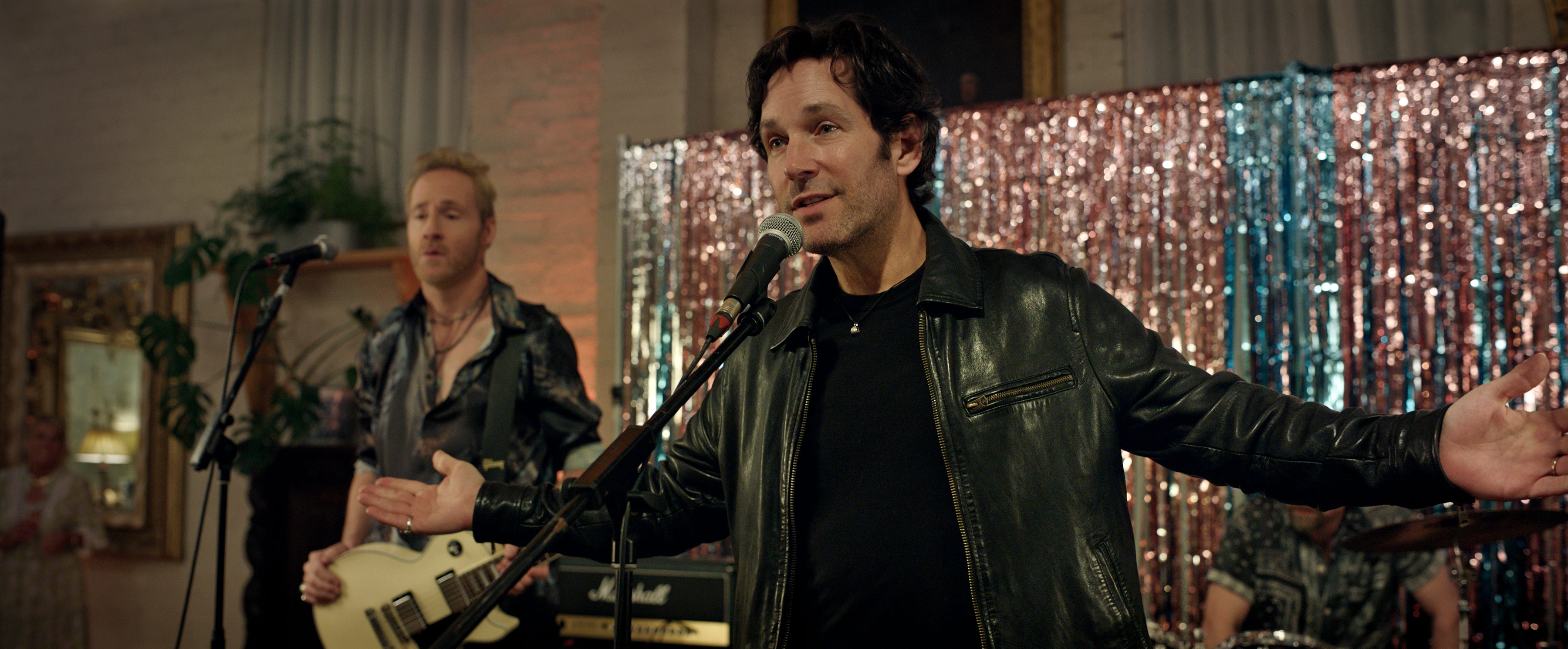
This time around, the underdog musician is Rick Power (Paul Rudd), a middle-aged coulda-been who traded in a promising rock career for marriage and fatherhood. The American in Dublin now makes a living as a wedding singer, which is far from the worst way to be a working musician. (One of the film’s biggest pleasures is watching Rudd ham it up to reception staples like “Summer of ‘69,” though he does not slap da bass.) Occasionally his old ambitions resurface. After bombing another attempt at playing an original, his bandmate has to remind him: “We’re not the rockstars, Rick. We’re human jukeboxes.”
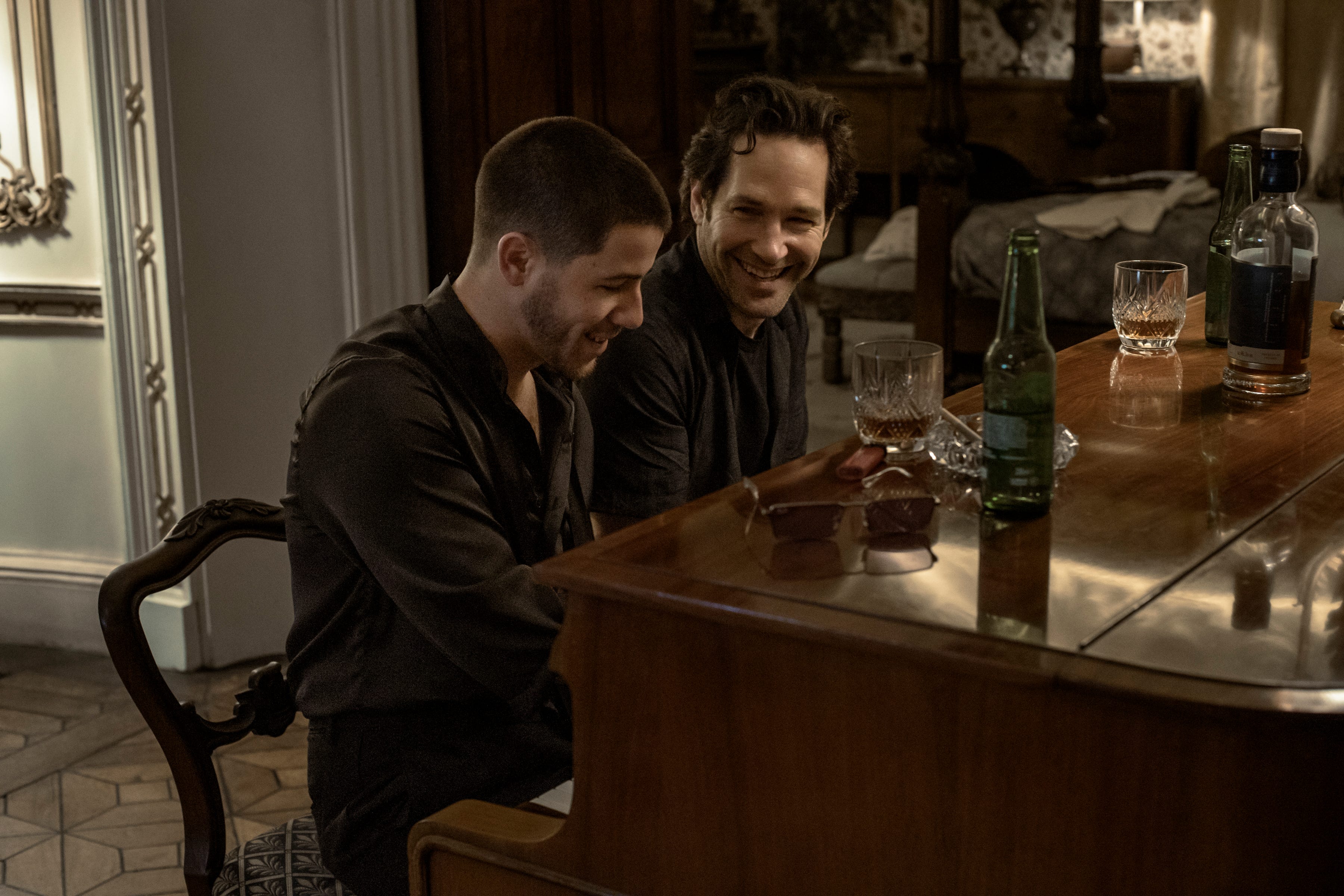
Into this semi-charmed life walks Danny Wilson (Nick Jonas), a pop star haunted by his boy band past; he happens to be a guest at one of Rick’s gigs. After an impromptu Stevie Wonder duet, the two strike up a conversation and find they share a desire to make grounded, authentic music. An all-night jam session breaks out in Danny’s suite, the two playing their work to each other over a few beers and a considerable amount of whiskey. Danny takes a particular shine to a plaintive ode called “How to Write a Song Without You,” which Rick has spent years struggling to finish. The morning after, the two cheerily part ways.
Six months later, Rick is at the mall when he hears a familiar melody over the speakers. It’s “How to Write a Song Without You,” but with a certain pop star’s voice. And it’s a smash hit. Danny may have gifted Rick a vintage Gibson the morning after their sing-cute, but he took something far more valuable.
As it rockets to the top of the Hot 100, Rick’s attempt at an amicable resolution is viciously rebuffed by Danny’s bulldog manager (Jack Reynor), with the pop singer claiming he came up with the song himself. Worse, Rick has no legal recourse, having never recorded a demo or written it down. Incensed, he sets off from Dublin to Los Angeles on a quest to get the credit (and royalties) that would change his life.
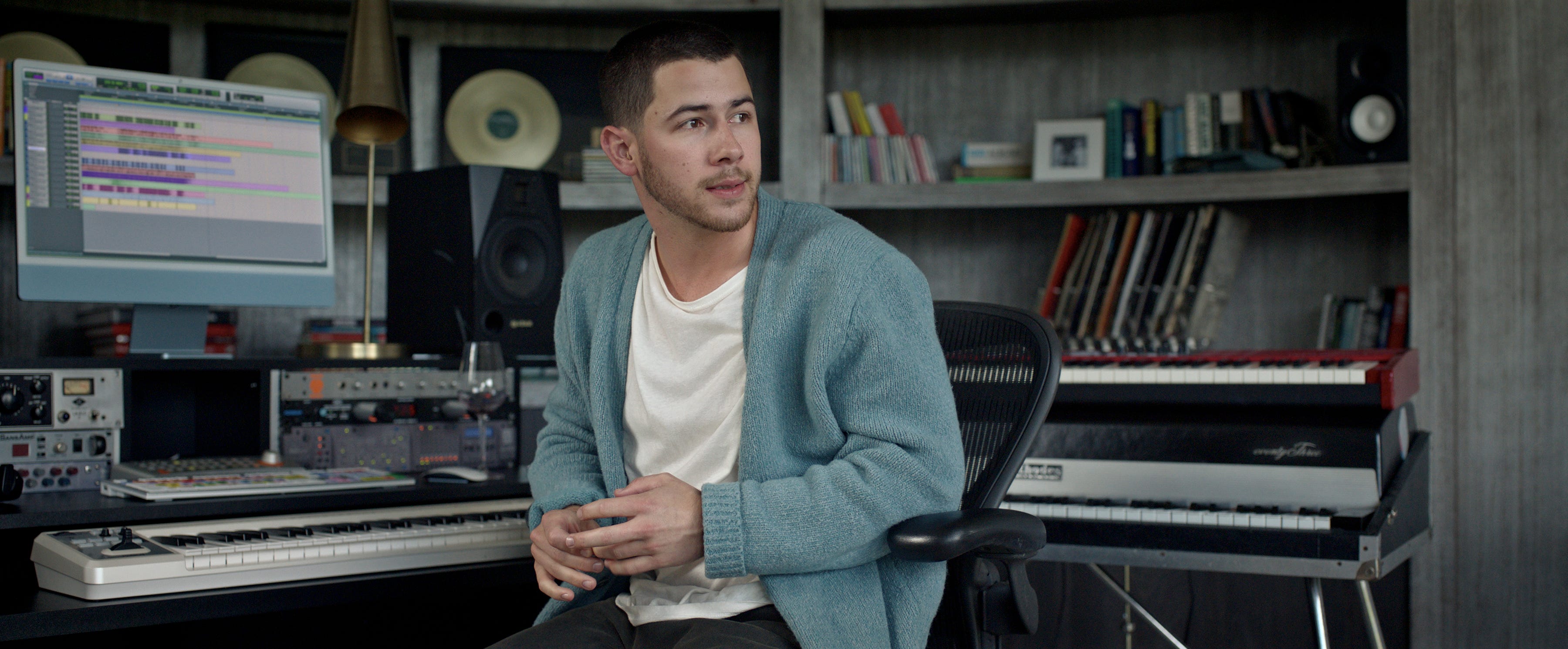
This is Carney’s most concept-driven premise yet, and for a while it works. It’s nice that Rick is at peace with having left his dreams behind, even if Rudd’s amiability doesn’t allow for a hint of resentment that could give his character an edge. And it’s a delightful bit of metatext to cast Jonas as a boy band kid who similarly struggled to transition to a mature R&B sound.
After Rick goes stateside, Power Ballad begins to fall apart, largely due to a screenplay that either needed more work or had a few rewrites too many. The LA stretch is far too compressed, with Rick and Danny’s inevitable reunion the result of a few too many leaps of logic. It doesn’t help that these scenes clearly weren’t shot in California. (Power Ballad was entirely filmed in Ireland; Dublin, it turns out, is a poor substitute for the City of Angels.) The stock footage used for exteriors is jarringly out of place. Carney’s never been a strong visual stylist, but there are some parts that look as if they were filmed on an iPhone, to say nothing of the computer-generated hot tub steam during a crucial scene.
The screenplay also struggles with Danny’s character arc. We see, early on, the moment that he starts the steal. His girlfriend Marcia (Havana Rose Liu) overhears him playing “How to Write a Song Without You” on his piano. She loves it; he says he wrote it for her. It’s her only scene in the film—a breakup is breezily announced during a montage—and her disappearance from the rest of the film appears to be the result of reshoots. Danny is steadfast that he didn’t steal his smash hit from Rick, but there are moments when the mask slips and you see him doubt his own version of events. Jonas plays this with an intriguing subtlety, but nothing much comes of it.
Is he a soulless villain or a co-lead who is misunderstood? Carney can’t decide and lands in a muddled middle. Imagine if, after they parted ways, Danny vanished from the movie. Rick still sees and hears him everywhere—on billboards, on his phone, on the radio—but the person remains forever out of reach. But this isn’t the story that Carney was trying to tell, so I won’t linger.
Carney’s films have never been musicals in the strictest sense—everything is performed diegetically—but the songs serve the same function, reflecting the emotional life of the character at that point in the story. This is the first time in Carney’s filmography that the original songs are largely ornamental. (This isn’t to say they are bad; the songs, written by Carney with frequent collaborator Gary Clark along with a contribution from Jonas, serve their purpose.)
The only song in Power Ballad that has any real bearing to the plot is “How to Write a Song Without You,” but the film is incurious about its effect on Danny’s musicianship. One imagines that its success pressures him to write more songs in this same vein. As he sings in the bridge, “this could be my albatross.” How to write a song without Rick? This dilemma isn’t so much glossed over as it is ignored. The power ballad is merely a MacGuffin.
More so than any of Carney’s prior films, Power Ballad feels like a cover version. His 2013 film Begin Again is also centered on a singer-songwriter who moves across the pond (in this case Keira Knightley comes to New York) whose brilliant song is stolen by a real-life pop star (Adam Levine, nicely cast as a douchebag) who blows it up to a wider audience than intended. Begin Again retains the kitchen-sink realism of Carney’s best work thanks to shooting in the streets of Manhattan, but it’s generally considered the weakest of his filmography. Thanks to Power Ballad, it’s now the second weakest, and these are the only two movies of his to be at least partially set in America2. Sometimes it’s better to stay home.
The original title for Begin Again was “Can a Song Save Your Life?” which perhaps was putting too fine a point on it.
In Flora and Son, Joseph Gordon-Levitt is located in LA but he only appears via video chat so it doesn’t count.