

Leaves Much to Be Desired
In "Silent Friend," Tony Leung considers the possibilities of plant consciousness.
The legendary Tony Leung has a new movie out, and to celebrate the occasion, Film at Lincoln Center put together a retrospective of his best-known work. It’s a running joke that showing In the Mood for Love is essentially a stimulus package for independent cinemas, but nearly every screening—from much-loved Chungking Express to the more obscure Cyclo—was sold out.
I was out of town during the bulk of the series, but I came back in time to see a print of Lust, Caution, which I had watched before but not in a theater. The rewatch confirmed to me that it is one of Ang Lee’s masterpieces, right next to Crouching Tiger and The Ice Storm, and Leung’s trademark vulnerability brought complexity to his first role as an outright villain.
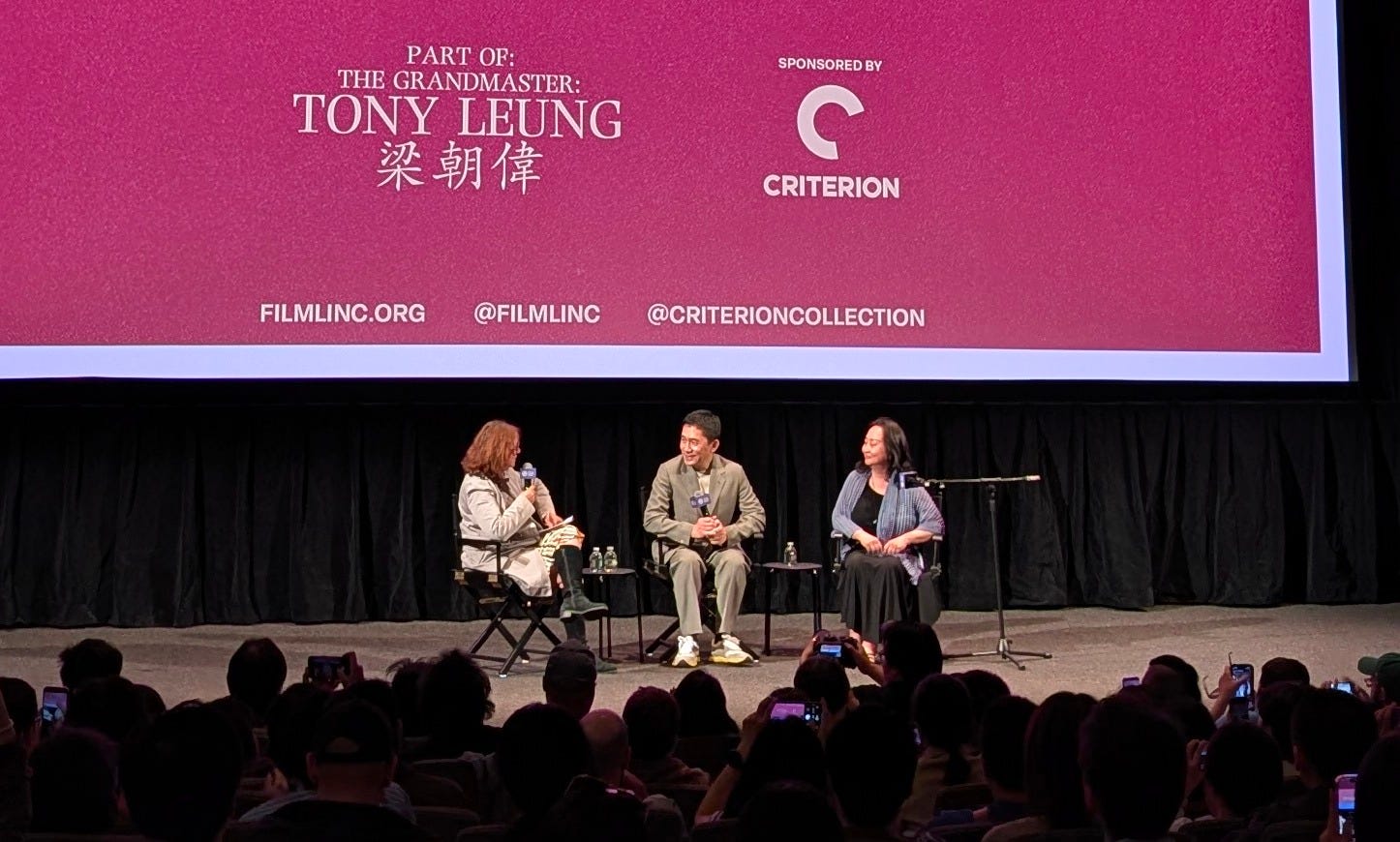
I also attended the “Evening with Tony Leung” special event, which promised an in-depth conversation with the actor about his storied career. This being his first visit to New York in twelve years, this was the hottest ticket in town. You may have heard that not every attendee was satisfied, especially if you are subscribed to /r/NYCmovies. I’ll just say two things:
Conducting an interview in front of an audience is a unique skillset that not everyone working in the film space can master1
The plague that is stage door culture has spread beyond Broadway
Leung was there to promote his new film, which I had the opportunity to screen in advance of its stateside release. My thoughts are immediately below, followed by a spotlight on the traditional German dishes featured in the movie.
Silent Friend
Now playing in NY at Film at Lincoln Center and the Angelika, with expansion to other markets beginning May 15.
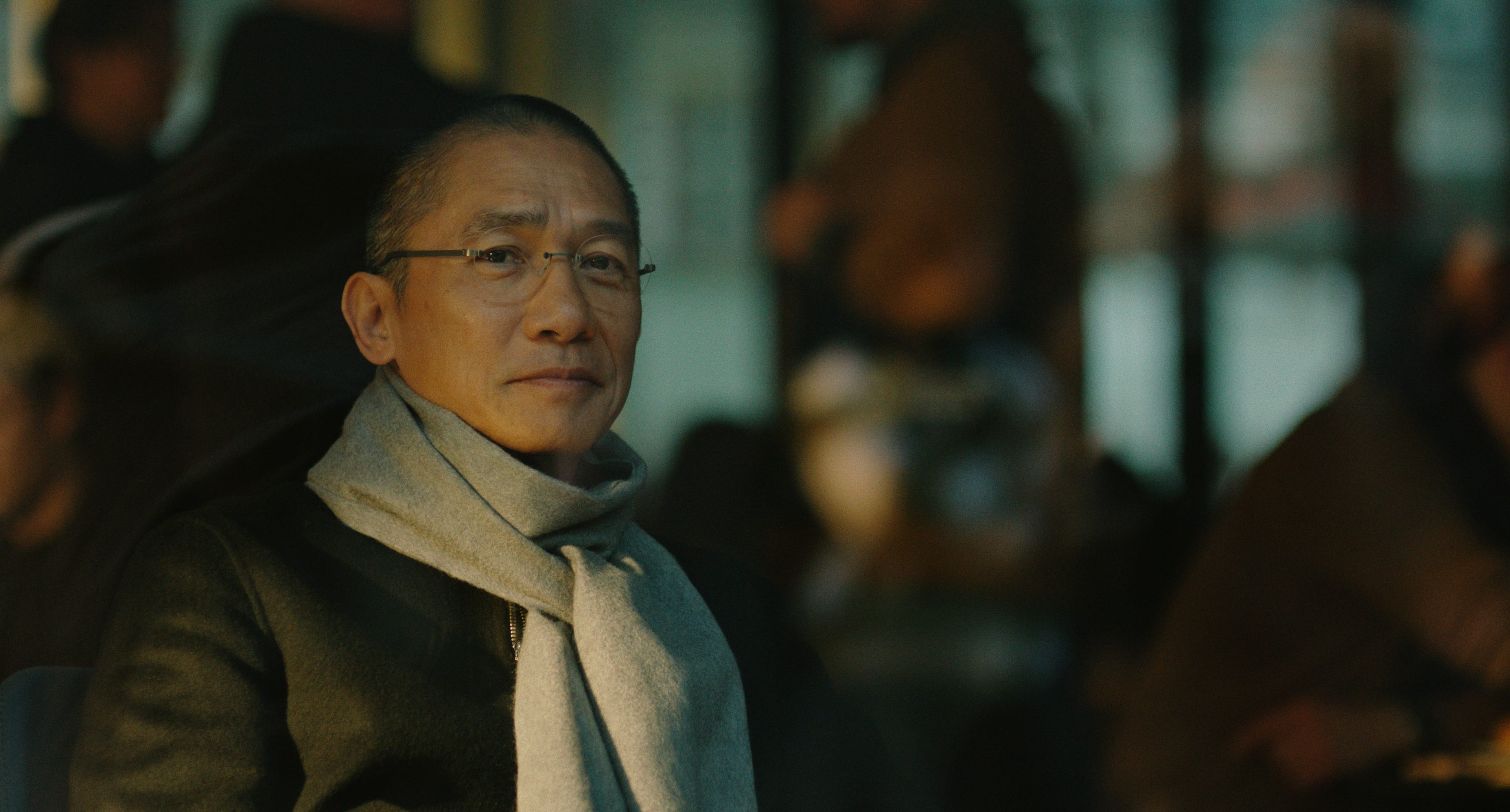
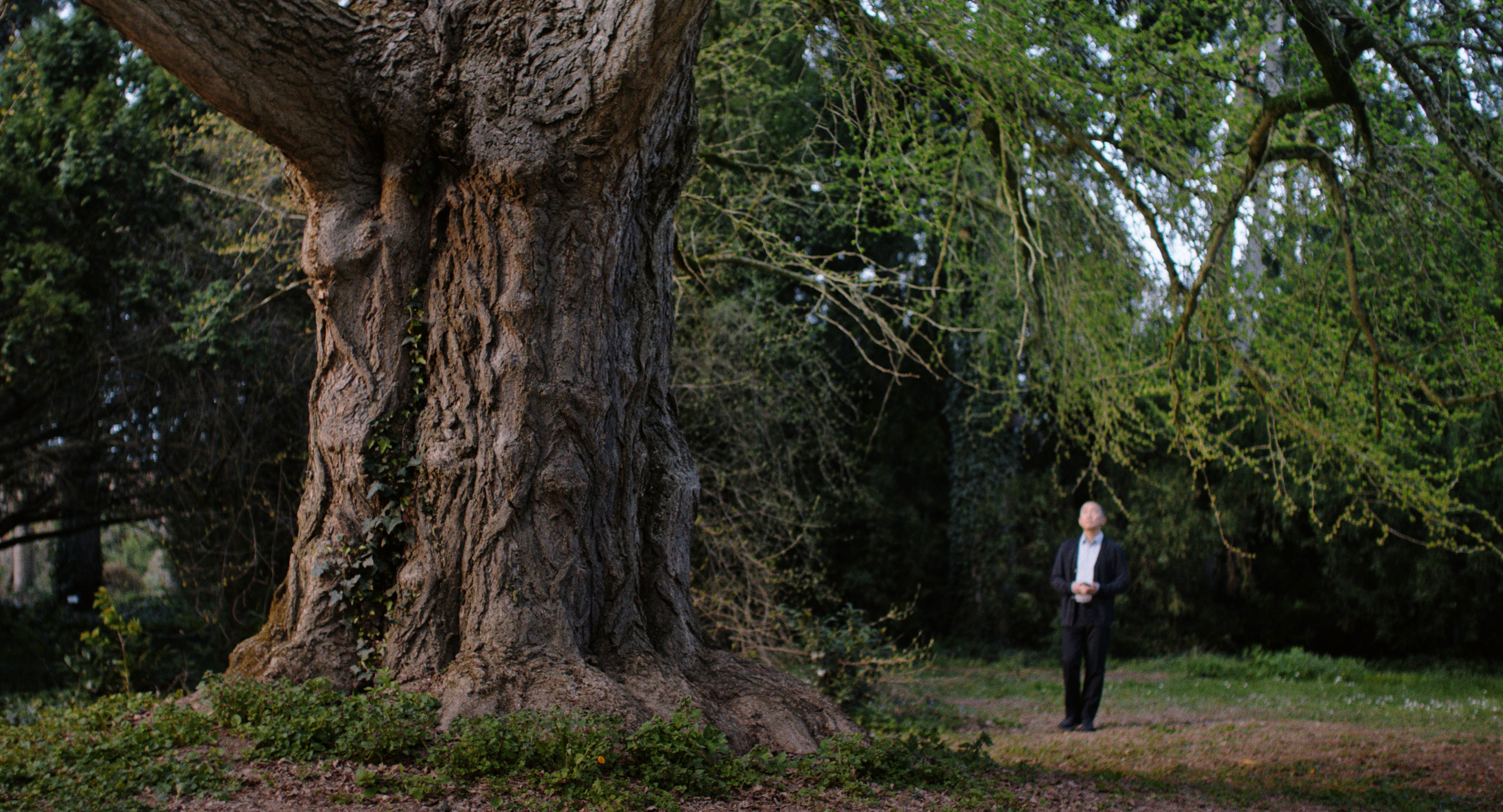
When Silent Friend was unveiled as part of last year’s Venice Film Festival, many cinephiles were excited by the cast list: Tony Leung and Léa Seydoux, two titans of international arthouse cinema, were starring in a project together. I was certainly intrigued, but reports out of the festival revealed that their characters communicated only through video calls, stretching the definition of “sharing a scene.” Knowing this beforehand spared me some disappointment, but I was surprised to find that the real star of this picture wasn’t a human actor, let alone Seydoux or Leung. As it turns out, the titular silent friend is a ginkgo tree.
Our breakout star was planted nearly 300 years ago, on the grounds of a university in Marburg, Germany. While many other plants are featured2, it is this tree around which the Hungarian filmmaker Ildikó Enyedi has structured her tritemporal narrative, in which three people from different time periods are transformed by their relationship with this singular ginkgo.
The film begins in the near past: Tony, a visiting neuroscience researcher (Tony Leung Chiu-wai), is suddenly marooned in Marburg thanks to the COVID pandemic. With no other company besides an immensely terse groundskeeper (Sylvester Groth), he begins to wonder if his experiments on consciousness could be extended to plants. (Seydoux appears, via aforementioned Zoom calls, as a pioneer in the field of botanical sentience.) The opening scenes establish Tony as someone who is considered and observant, and Leung is perfectly cast for this kind of watchful stillness, even if the film doesn’t ask much more from him.
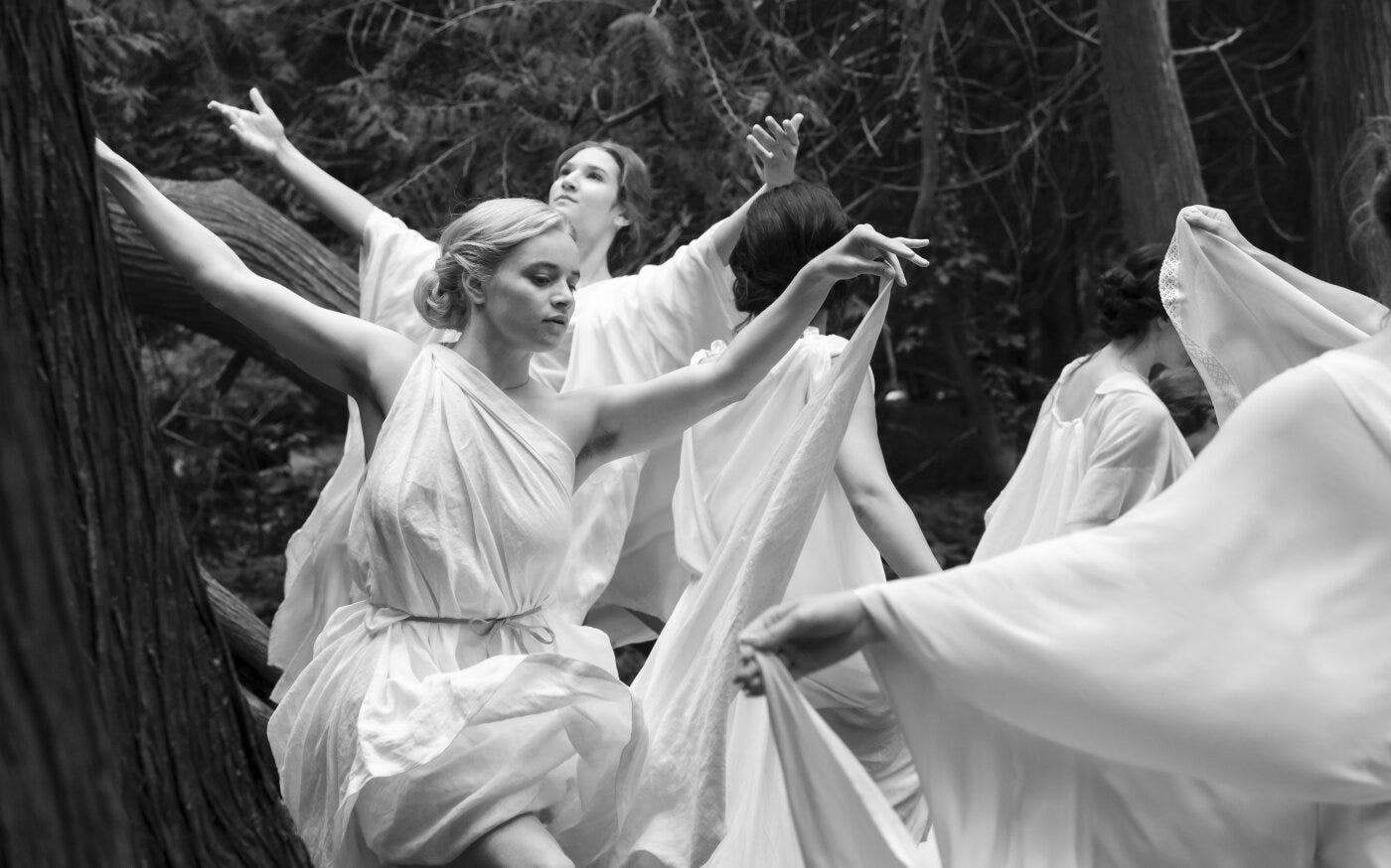
Before long we are flung back in time, to the beginning of the 20th century. In the same location, a budding scientist (Luna Wedler) who is the first woman accepted into the university, finds the botanic gardens to be a temporary reprieve from the academy’s entrenched misogyny. We’re then brought forward to the more equitable 1970s, when a student (Enzo Brumm) cares for his crush’s geranium plant and discovers that it may be capable of more than providing window dressing.
After establishing these different stories, Enyedi freely cuts across them. We’re never unsure which era a scene belongs to since they each have a distinctive visual format: black & white in 1908, grainy 16mm in 1972, and crisp digital in 2020. Occasionally there are more oneiric passages consisting of close-up photography and 3D renderings that bring us into the world of the ginkgo tree. The juxtaposition of these timelines suggest an eventual convergence into something profound. But like a toiling researcher, I kept waiting for a revelatory insight that never arrived.
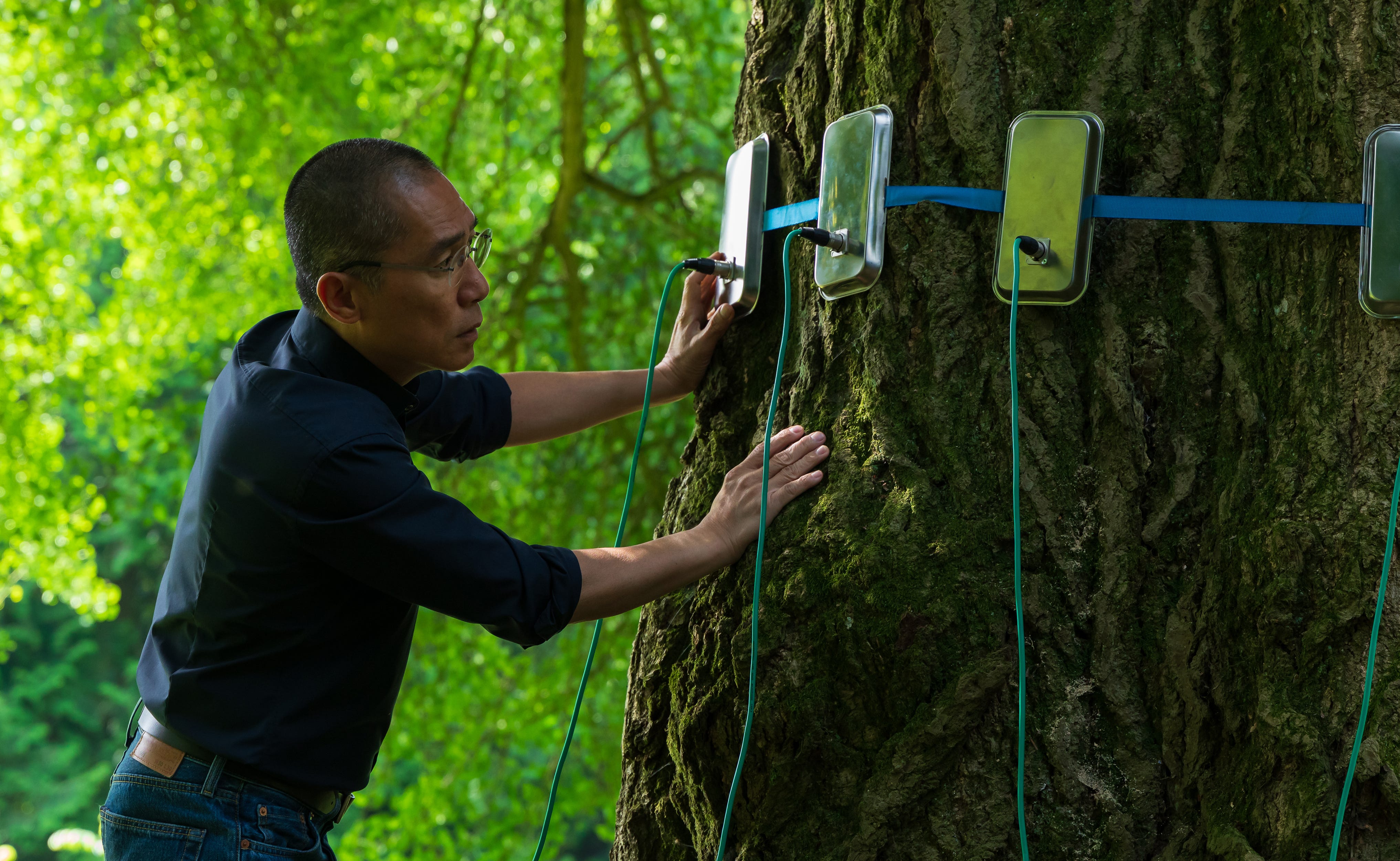
Leung is one of our greatest living actors, but he had only appeared in Asian productions until 2021, when he made his Hollywood debut in a Marvel movie. Silent Friend marks his first time working in Europe. In both of these foreign films, he’s tasked with little more than letting the audience project onto him their memories of his most famous roles. During a talk he gave at Film at Lincoln Center, Leung recalls asking Enyedi what she wanted from his performance, to which the director replied, “I just need you to be there.” That speaks to Leung being a natural fit for the role, which was written specifically for him. At the same time, it inadvertently exposes the hollowness of this kind of Euro arthouse film, in which a commitment to observational restraint comes at the expense of dramatic payoff. And that’s the root of the problem: of the three protagonists, only Tony gets an arc that approaches a satisfying resolution. The two past strands show promise but never bloom. But consider the ginkgo: this species of tree can live for three millennia. What’s a century to this silent friend?
Tasting Notes


The most amusing runner in Silent Friend involves Tony Leung’s reaction to traditional German dishes. At a welcome dinner in Marburg, he eats a hefty plate of Schweinshaxe, a slow-roasted, crispy pork hock served atop a bed of potatoes, all washed down with the local bier. This does not agree with his gut biome and that night he throws up on the ginkgo tree. (I’m sure he apologized later.)
Having never been to Marburg, I have no idea which restaurant they filmed in, but based on my (likely faulty) memory of that scene, I trawled Google Maps for restaurants near campus and I think the location is Restaurant Ratsschänke.
Towards the end of the film, during a conciliatory supper, Tony is served Himmel und Erde, which translates to “heaven and earth.” It’s a mixture of mashed potatoes and mashed apples, topped with caramelized onions, and served with a couple links of blood sausage. Having become better acclimated to Germany, there is no post-meal vomit.
Typically I would recommend an eating establishment in New York that would pair well with this movie, but frankly I haven’t found a German restaurant that I actually like. Maybe the cuisine is the problem…
I think I would be good at it though.
The end credits includes a list of “Featured Plants” that is longer than that of the human cast.