

Our Quotidian Pain
Reviews of “Revelations of Divine Love,” “Living the Land,” and “Kontinental ‘25.”
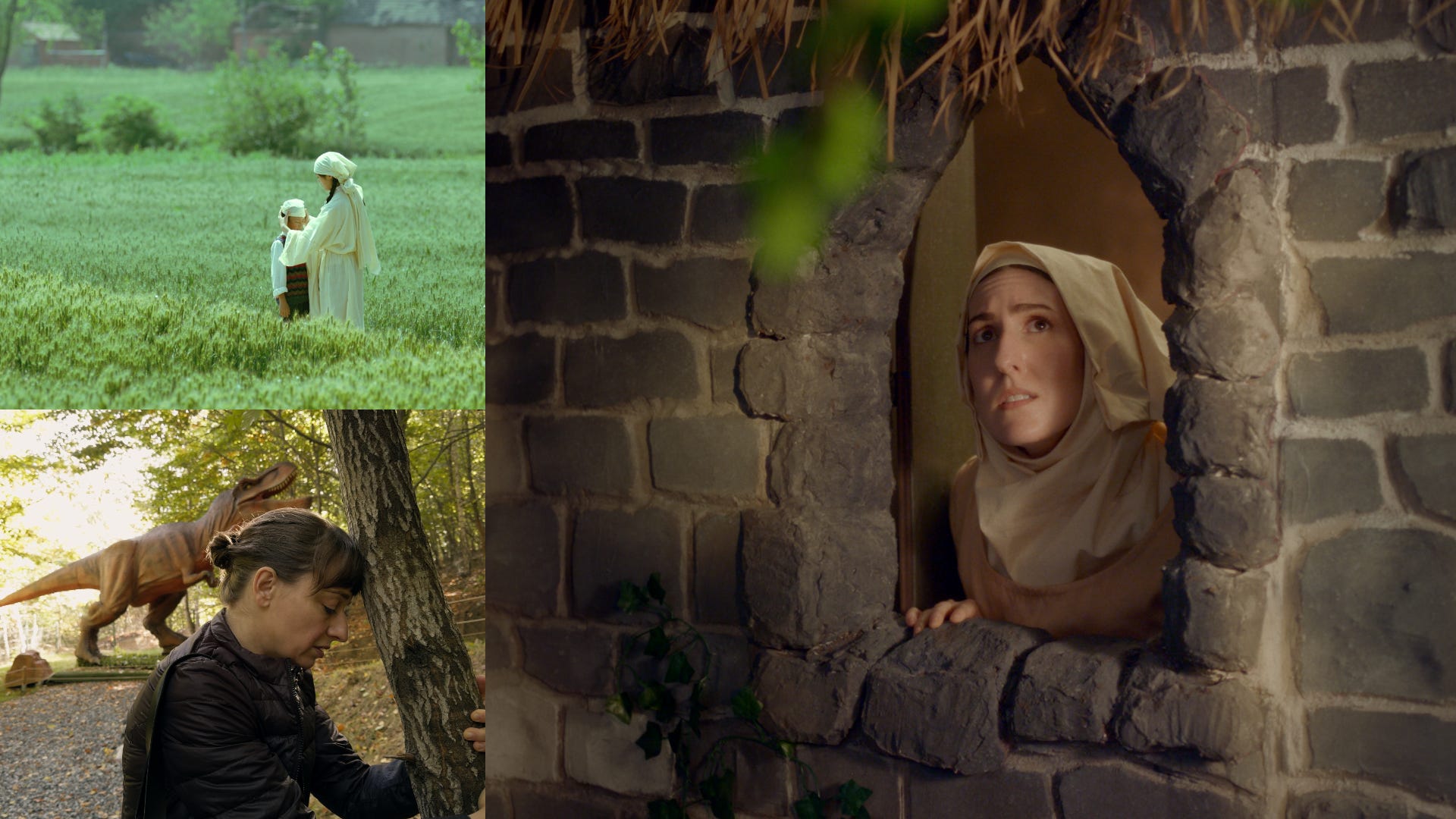
Another week, another round of artsy movies to review! It’s nice that every movie I’ve covered lately has been pretty good. I’m still perfectly cranky with some other movies I’ve watched; I’ll drop my take on Project Hail Mary soon enough.
That could be an alternate title for Revelations of Divine Love, a DIY chronicle of spiritual searching and fulfillment in the Middle Ages, which I discuss below. Also reviewed: Living the Land, a naturalistic chronicle of wheat farmers in rural China in the early 1990s (out in next week), and Kontinental ‘25, Radu Jude’s sly morality comedy about ordinary Romanians contending with late-stage capitalism in the 2020s.
Revelations of Divine Love
Opens March 27 in NY at Anthology Film Archives for a one-weekend run, alongside a director-selected series of films set in the Middle Ages. Further screenings at various NY venues will be held throughout April, and a Seattle run begins April 15 at Northwest Film Forum.
There’s a pretty stark difference between “religious movies” and “movies about religion.” The former category, also known as “faith-based films,” tend to be little more than Evangelical propaganda underwritten by right-wing millionaires. (Not that I’ve actually watched any; I try not to be in the business of misery.)
Movies about religion, in contrast, are more likely to have artistic merit. The best of them explore universal subjects that resonate with even the most secular of viewers. But recent entries in this canon view their subjects at a distance; I found The Testament of Ann Lee to be curiously incurious about faith, as both an interior and a collective experience. In that context, it was refreshing to encounter Revelations of Divine Love, which was directed by Caroline Golum on a shoestring budget. Centering on the life and work of the 14th century religious figure Julian of Norwich, the film treats its central figure’s notions of spirituality earnestly and seriously.
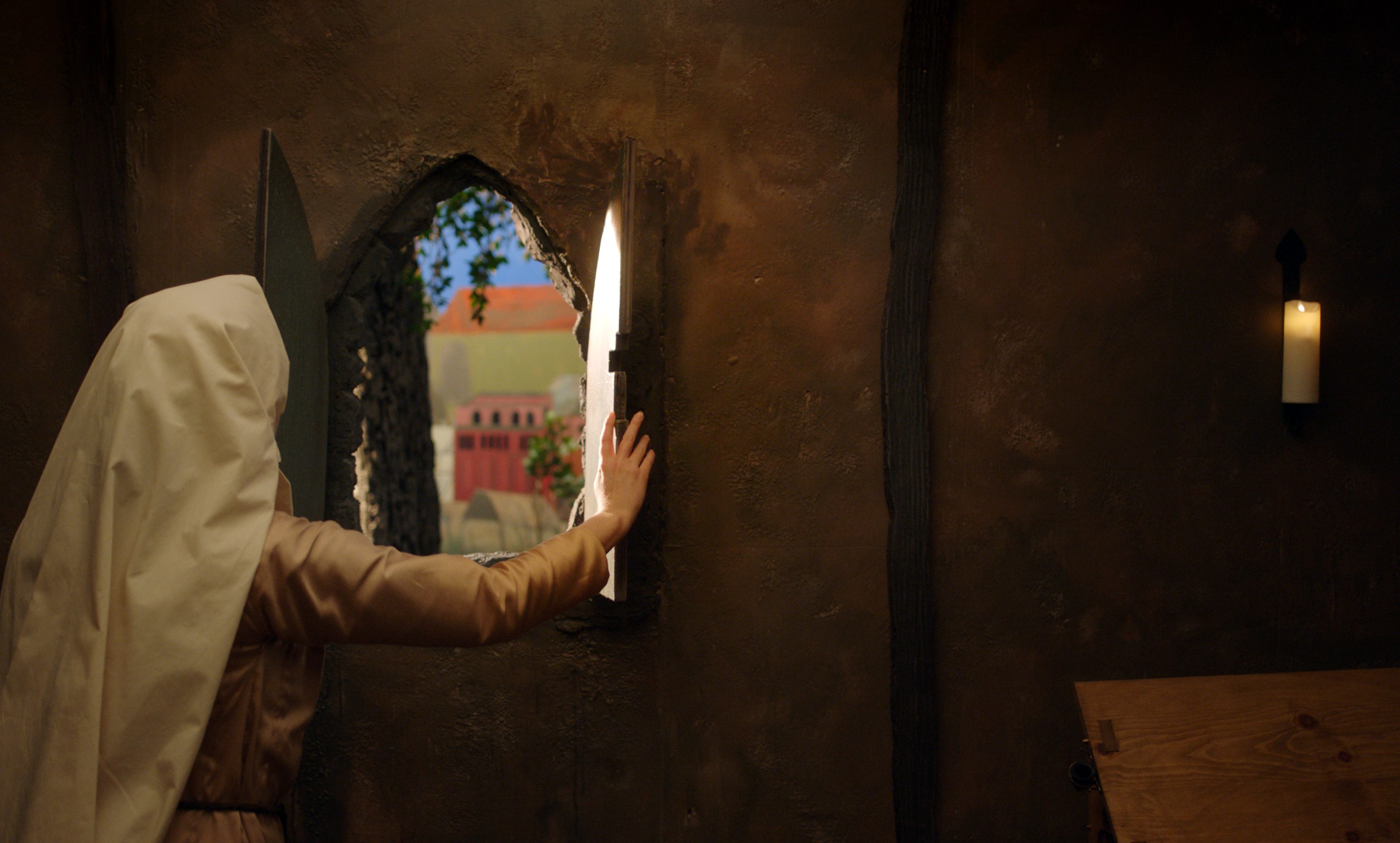
When we first meet Julian (Tessa Strain), she’s being sealed into a cell. A bishop administers rites while a laborer builds the wall that will shut her in for the rest of her life. But this isn’t The Cask of Amontillado—Julian has chosen to become an anchoress, someone who sequesters herself from wider society to devote her life towards God. She stands with confidence, her piercing gaze looking out as the last stone is placed.
She has good reason for such conviction: around the age of thirty, Julian fell severely ill and was close to death when God revealed Himself to her through a series of visions. Her account of these “showings” is considered to be the earliest surviving book in the English language that was written by a woman. (The film borrows its title from this collection of writings.) Not much is known about Julian’s life—it might not even be her real name; she lived in St. Julian’s Church in Norwich—and Golum (who wrote the script with medieval scholar Laurence Bond) provides informed speculation to fill in the blanks.
Despite being a bootstrapped production—the budget was only $100,000—the film provides an expansive insight into a proto-feminist figure of medieval Christianity. Perhaps I watch too many movies about organized religion being used as a tool for persecution, because I found it remarkable that when Julian tells her priest about her divine visions, he simply believes them to be true. But that must have been the case in reality; otherwise, how would she have had the support of the church to become an anchoress?
Though Julian is sealed in an austere cell, she is not fully isolated from the world. Nuns bring her food every day, while townsfolk line up to catch a glimpse of this cloistered woman through a small window. In turn, she offers them counsel and prayer. Sometimes there are unintended consequences: her advice to a farmer frustrated with high taxes inadvertently sets off a peasant riot. This being the Middle Ages, Julian bears witness to upheavals both personal and societal—uprisings and plagues and the like—all the while remaining steadfast in her belief of God being a force of love. Her ministry is one of positivity despite hard times: “God loved us before he made us; and his love has never diminished and never shall.” She remains equally committed to life as an anchoress; she could ask the bishop to unseal her at any time. The only exception to feeling like she was born for this life comes when her mother appeals for her to come back home. Julian was not the only one who made a sacrifice.
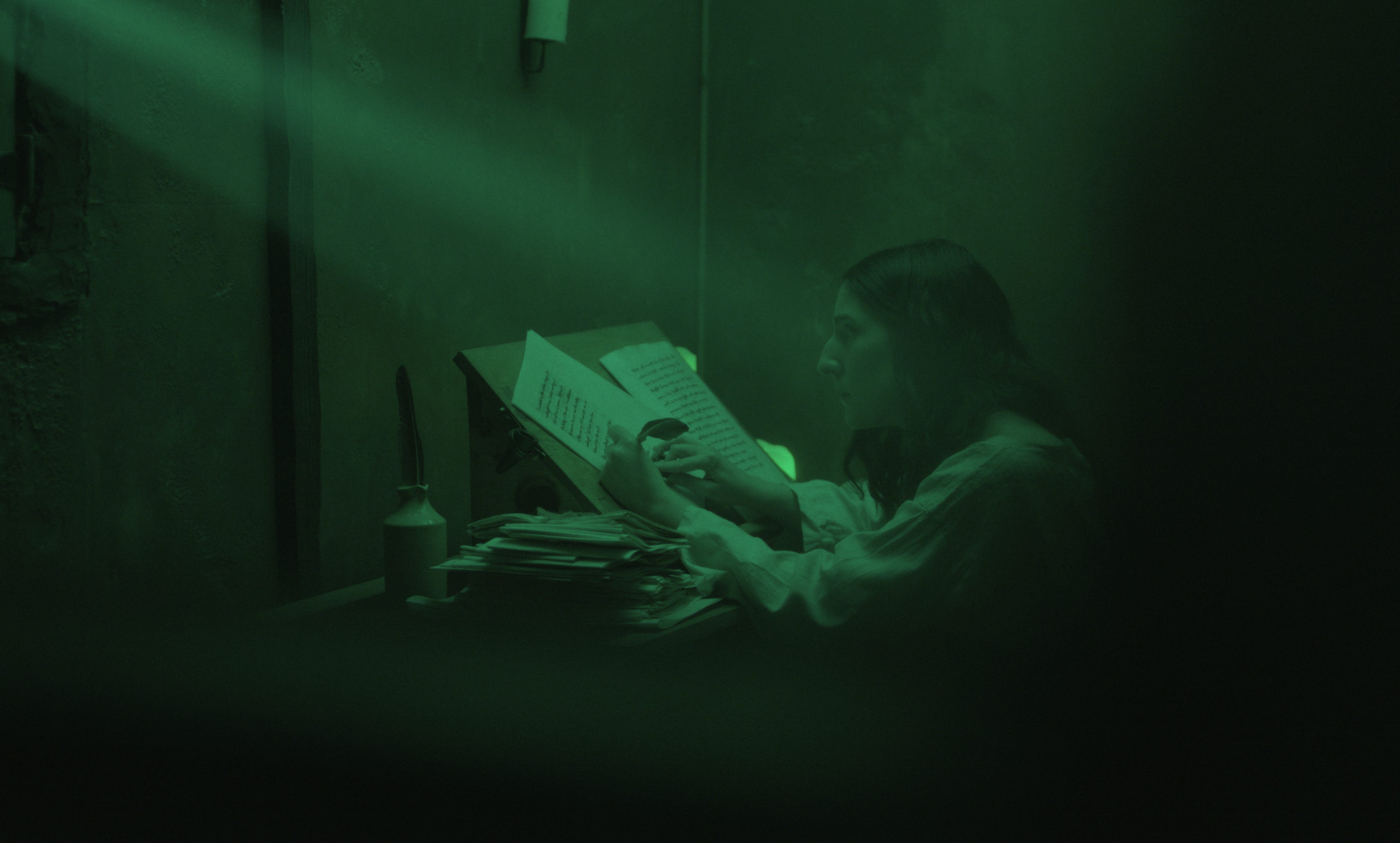
Throughout the film’s fleet 75-minute runtime, we see Julian write what would eventually become Revelations of Divine Love. It wasn’t always smooth sailing. Water seeps into her cell when it rains, jeopardizing her manuscript, and as the years wear on, she finds it harder to decode the meaning of her initial visions, asking “how can all things be well when sin is still common?” Despite these lofty concerns, watching the film is overall a calming experience. The reverie of a score, composed by Zachary Koeber, consists of medieval instruments set against new age synths, and the charming sets and costumes come off as Ren Faire in Ridgewood. (Remember the $100,000 budget.) Those used to total verisimilitude in their movies, upon encountering such handmade textures, may be left a little wanting. But they should keep in mind one of Julian’s key proclamations: “seeking is as good as beholding.”
Tasting Notes
One of Julian’s visions involves the humble hazelnut, which becomes a recurring motif throughout the film. God tells her “it is all that is made,” to which she reflects: “In this Little Thing I saw three properties. The first is that God made it, the second is that God loveth it, the third, that God keepeth it.”
Later, one of the nuns in the abbey receives honey from her family’s apiary, which the sisters use to make spiced cakes and candied fruits. For a more modern rendition of medieval English fare, try King Arthur’s version of honey cake, or better yet, this recipe for a Hazelnut Honey Spice Cake with Caramelized Apples. Whatever you do, garnish each slice with that singular hazelnut. Drink it with the blood of Christ: perhaps a Sauternes, though that dessert wine may be too indulgent for the likes of an austere anchoress.
Further reading: For Hell Gate, friend of the newsletter Dan Schindel interviewed Golum about making a medieval movie on a shoestring budget. Other friend of the newsletter Chrissy Griesmer also spoke with her last year for the “Medieval May” issue of film zine 4R Press (PDF, page 14).
In case you missed it: I interviewed the chef who provided craft services for this production!
Feed the Body, Nourish the Spirit

It’s not every day that someone I personally know is listed in the end credits of the movies I watch. So it was a delightful surprise to recognize the caterer for Revelations of Divine Love, which receives its New York theatrical release this weekend at
Living the Land
Opens April 3 in NY at Film Forum, with expansion to select markets to follow.
A year in the life of a family in rural China unfolds in a patient, documentary-like manner in Huo Meng’s remarkable sophomore feature. Living the Land is set in 1991, a period of rapid modernization that flung China away from an agrarian society towards a technological one. But out in the provinces, it’s as if industrialization never even occurred. Farm labor is still done by hand, and people prefer to use the lunar calendar.
Movies with this general form—naturalistic immersion, long observational takes, sociological intent—are typically described as “slow cinema.” And that label applies here, but once you’re in its rhythm, this film feels anything but. The camera is almost constantly panning across the landscape, reflecting this restless time in history, and Meng composes his frames with the precision of a painter. Moments of nostalgia—sun-dappled wheat fields, a popsicle purveyor travelling via bicycle—are undercut by a clear-eyed view of hardscrabble reality. Meng won the Silver Bear for Best Director at last year’s Berlin Film Festival, and I can see why.
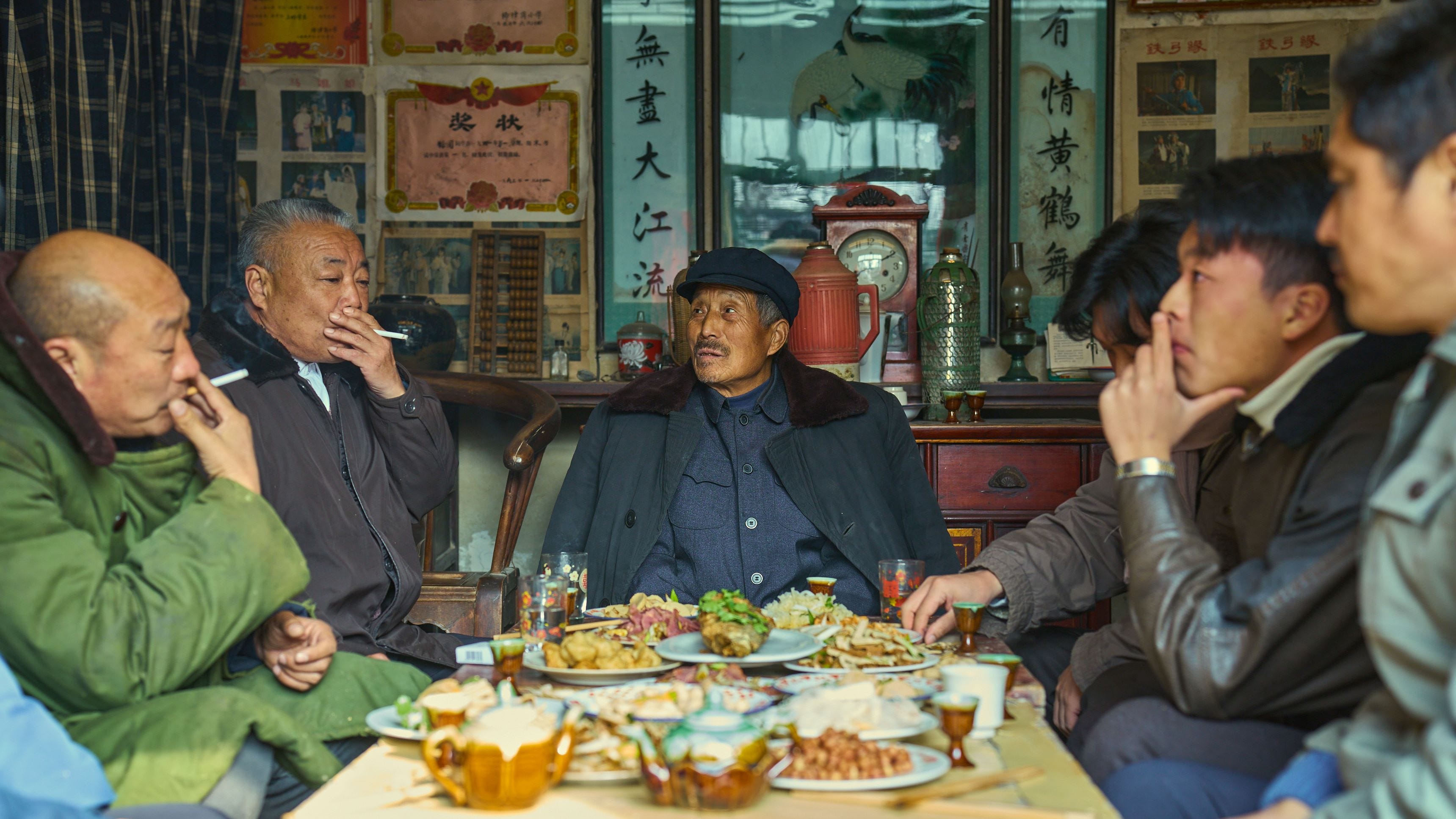
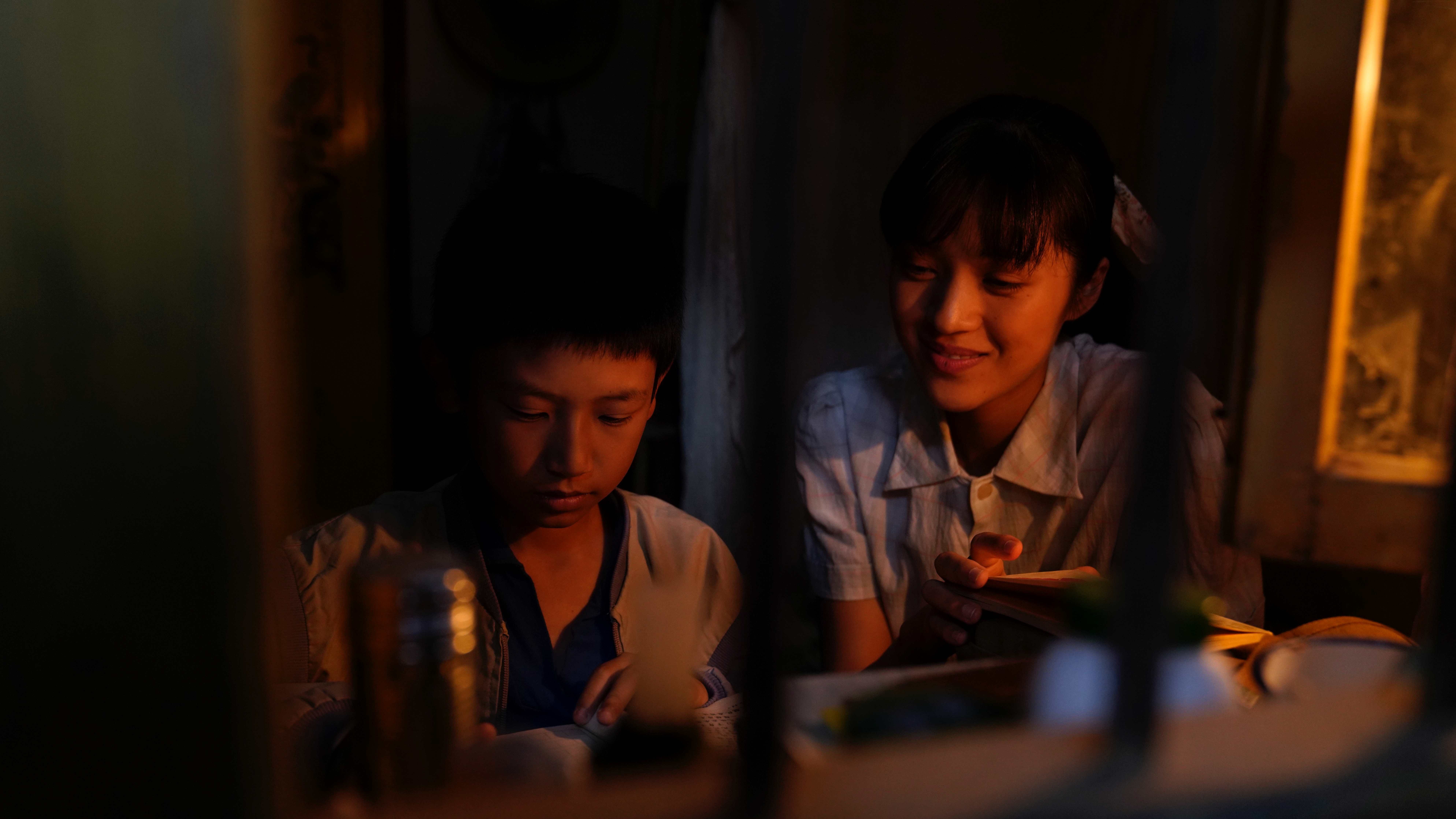
Exposition is doled out piecemeal, but you get just enough to understand the dynamics between this multi-generational ensemble of characters. Three of them get an emphasis in the plot: Xu Chuang, a ten-year-old whose parents leave him behind as they set off to Shenzhen in search of more lucrative work, Xiuyang, his young aunt who contends with an unwanted marriage proposal from a wealthy government official, and his great-grandmother, the matriarch of the family who feels increasingly like a relic of the past.
Living the Land doesn’t go as far as to openly criticize the government—various state institutions produced the film—but it is an undeniably discordant portrait of those affected by the changes happening at the turn of the century. (If you want to reach for an easy comparison, think Jia Zhangke script directed by Hou-Hsiao Hsien, with visual inspiration from Millet.) Meng hails from the same province where the film is set and grew up during this time, making this project feel like one of remembrance and reanimation. I sometimes struggle with these kinds of international arthouse movies, but it’s hard to dismiss this as one where nothing happens, because everything is.
Kontinental ‘25
Opens March 27 in NY at Film Forum, with limited expansion to follow. Adapted from previously published NYFF coverage.
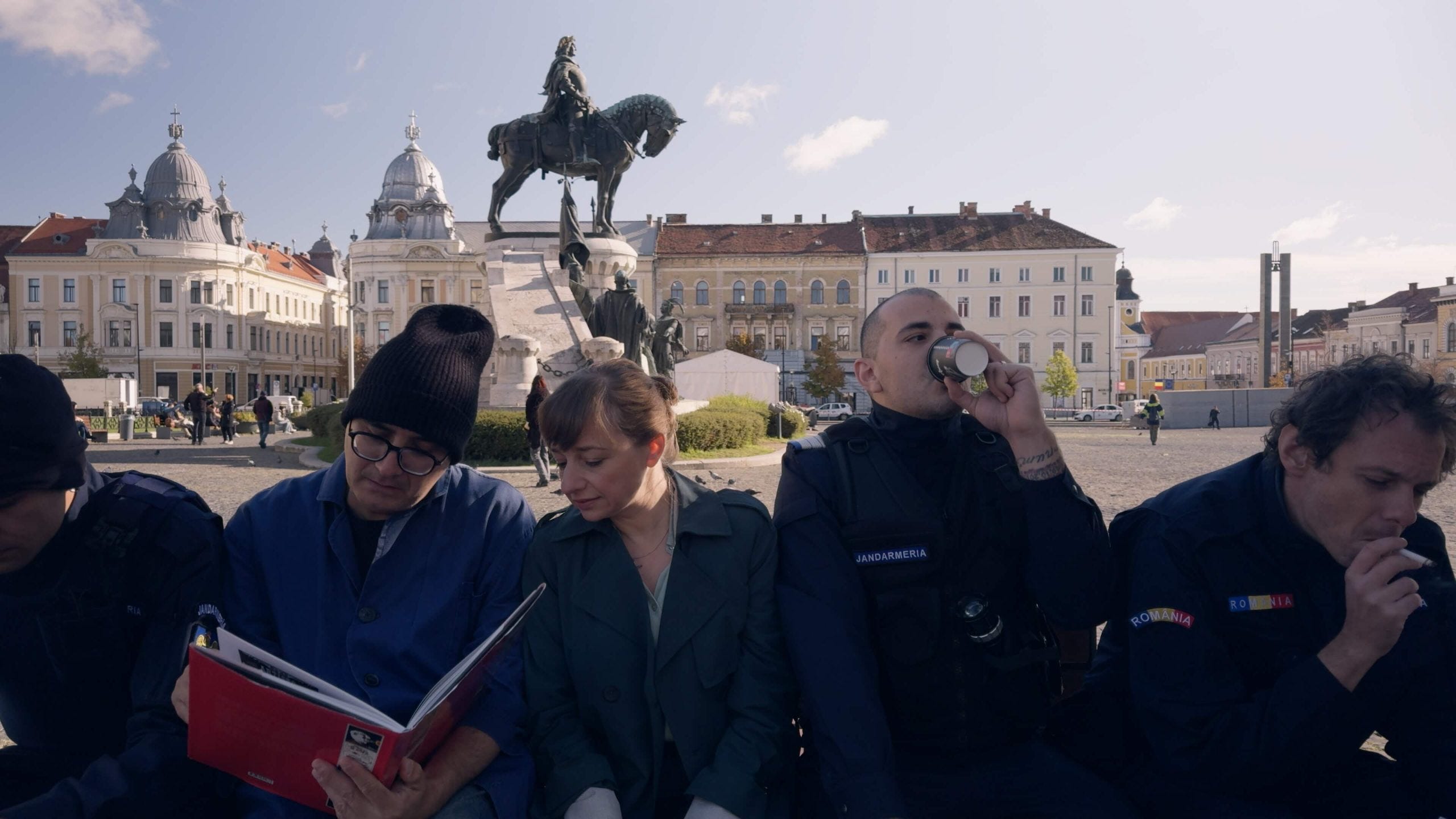
Romanian troubadour Radu Jude has been rather prolific of late, with two of his films having toured last year’s festival circuit. Dracula and Kontinental ‘25 were made in concurrence with each other, with the latter film coming about when Jude felt the need to make a “more down-to-earth film” compared to the maximally bizarre, AI-fuelled Dracula. (I reviewed it last year. It’s a hoot.) Though it was shot using iPhones in just ten days, Kontinental ‘25 doesn’t feel too out of place with his other of-the-moment chronicles of absurdity. It may feel like a retread of his prior works, but I’m not tired of that yet!
This time around, our agent of late capitalism is local bailiff Orsolya (Eszter Tompa), who oversees an eviction of a homeless man that ends in tragedy. Though not legally liable for the outcome, she’s wracked with moral guilt. Through conversations with various people in her life—a co-worker, her mother, a former student, her priest—she attempts to find an ethical framework that can absolve her complicity in enforcing laws that serve capital, not people. It’s quite the crash out.
In a departure from Jude’s usual Bucharest setting, Kontinental ‘25 takes place in Cluj, the commercial center of Transylvania. (This being a natural result of shooting Dracula at the same time.) The most memorable location is Dino Land, an uncanny animatronic Jurassic Park that offers a refuge from the bustling city streets. Perhaps the funniest image in the entire film is of Orsolya kneeling and reciting the Lord’s Prayer while a pterodactyl crows and gesticulates in the background. The Transylvania setting also allows Jude to touch on the active prejudices between Central European ethnicities: Orsolya is a member of the country’s Hungarian minority, and jokes about the vices of Romanians and Hungarians alike are freely volleyed.
Even with independent "religious" movies,so not underwritten, they're almost all Christian-faith driven. Which makes me wonder: why is this the ONLY religion that is so obsessed with having entertainment that expressly pushes thrir views? It's not just movies a Christian wouldn't object to, thry want to make movies expressly about their religious views. I know it's a prosthelitizing religion, but it's not the only one. Yet it's (seemingly) the only one desperate to have movies banner waving its religious proclamations.