

With a Little Help From Her Friends
Gail Daughtry and the Celebrity Sex Pass, Take Care of My Cat (2001), My Name Ain’t Suzie (1985)
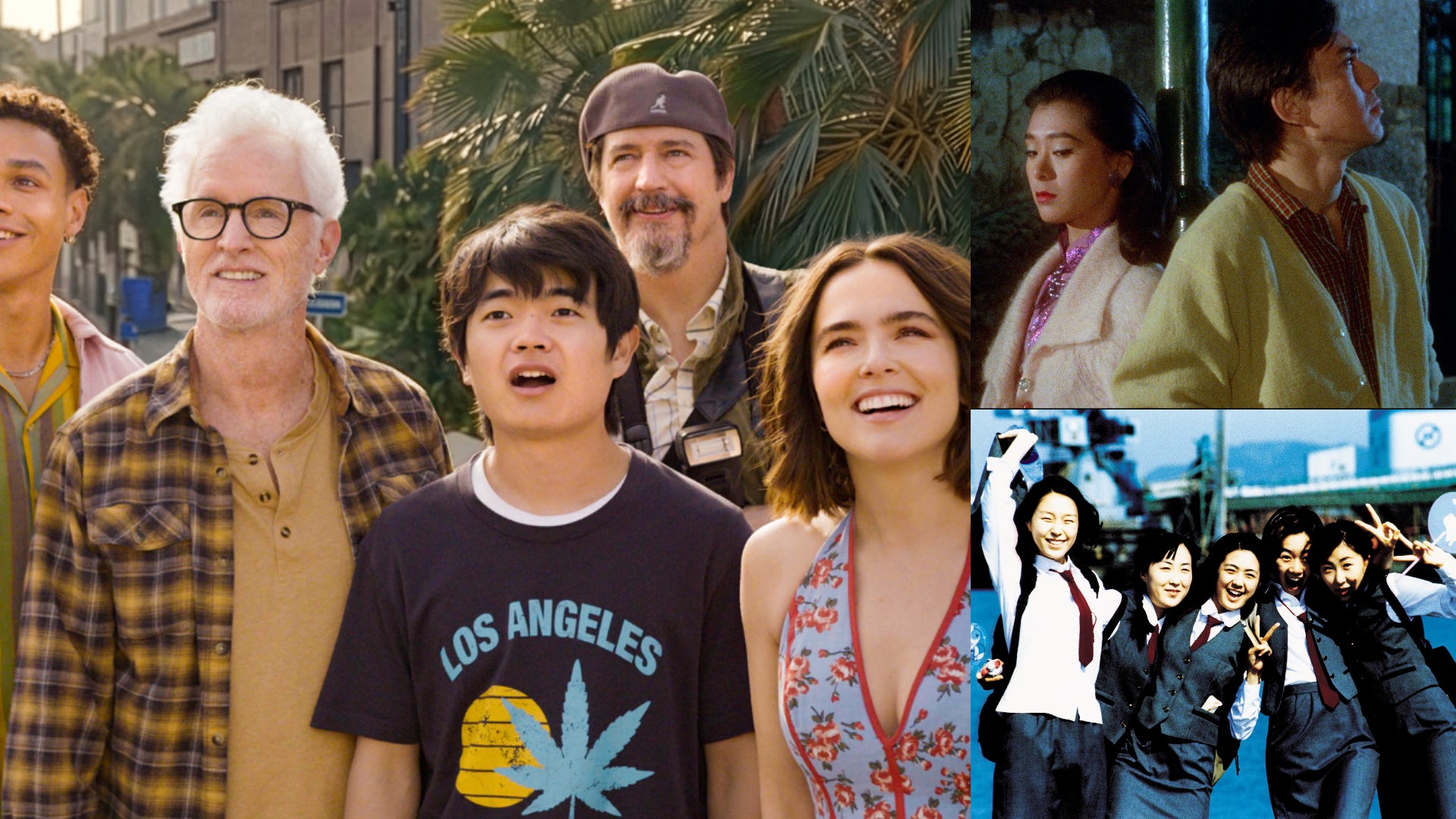
A break from my World Cup diaries (the final edition of which will be published tomorrow!) for a word on some movies. All three are about a woman whose quests are made possible thanks to her friends, but that’s a pretty superficial commonality. There’s a review of Gail Daughtry and the Celebrity Sex Pass, a new comedy in which Zoey Deutch tries to have sex with Jon Hamm (relatable). Before that, some brief words on Korean girlhood tale Take Care of My Cat and Hong Kong feminist melodrama My Name Ain’t Suzie, both of which have new restorations playing at the Metrograph this weekend.
The World Cup has really put me behind with moviegoing. I still haven’t seen Obsession or The Invite—why didn’t anyone tell me it’s about a dinner party??—but I plan to do so ASAP.
Take Care of My Cat (2001)
Now playing at Metrograph in NY as part of the series Among Friends; screenings are scheduled in Washington and across Canada.
Jeong Jae-eun’s debut feature opens with a familiar scene: a quintet of high school girls, giggling and dancing. They pose for a photo, and with the flash of a digital camera the film fades to white—a moment in time preserved but never to be experienced again. They’ve just graduated, and with life taking them on separate paths, it will turn out to be the last time they feel such camaraderie.
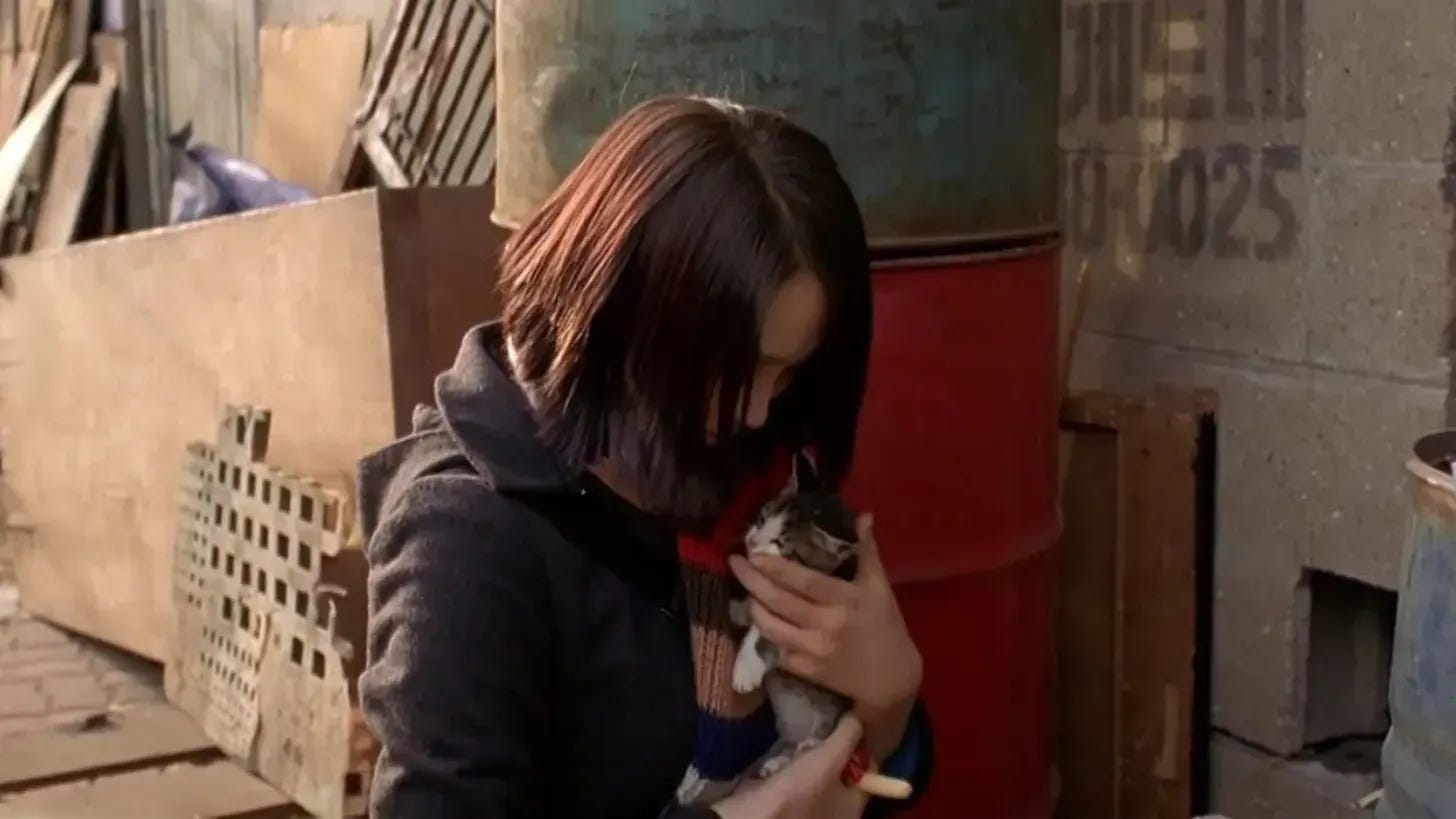
Set in Incheon, a port city adjacent to Seoul, Take Care of My Cat is a coming-of-age drama that observes, with plainspoken fatalism, the coming apart of a tight-knit friend group due to diverging economic circumstances. The starkest contrast emerges between Hae-joo (Lee Yo-won), an upwardly mobile office worker, and Ji-young (Ok Ji-young), a talented artist who lives in poverty with her grandparents and is unable to find employment. Attempting to bridge the ever-increasing gap is Tae-hee (Bae Doona), who works at her family’s sauna business while dreaming of having more meaningful purpose. (The cat referenced by the film’s title is a gray tuxedo tabby discovered on the side of the road. She gets passed around each of the five friends, but don’t worry—nothing bad happens to the kitty.)
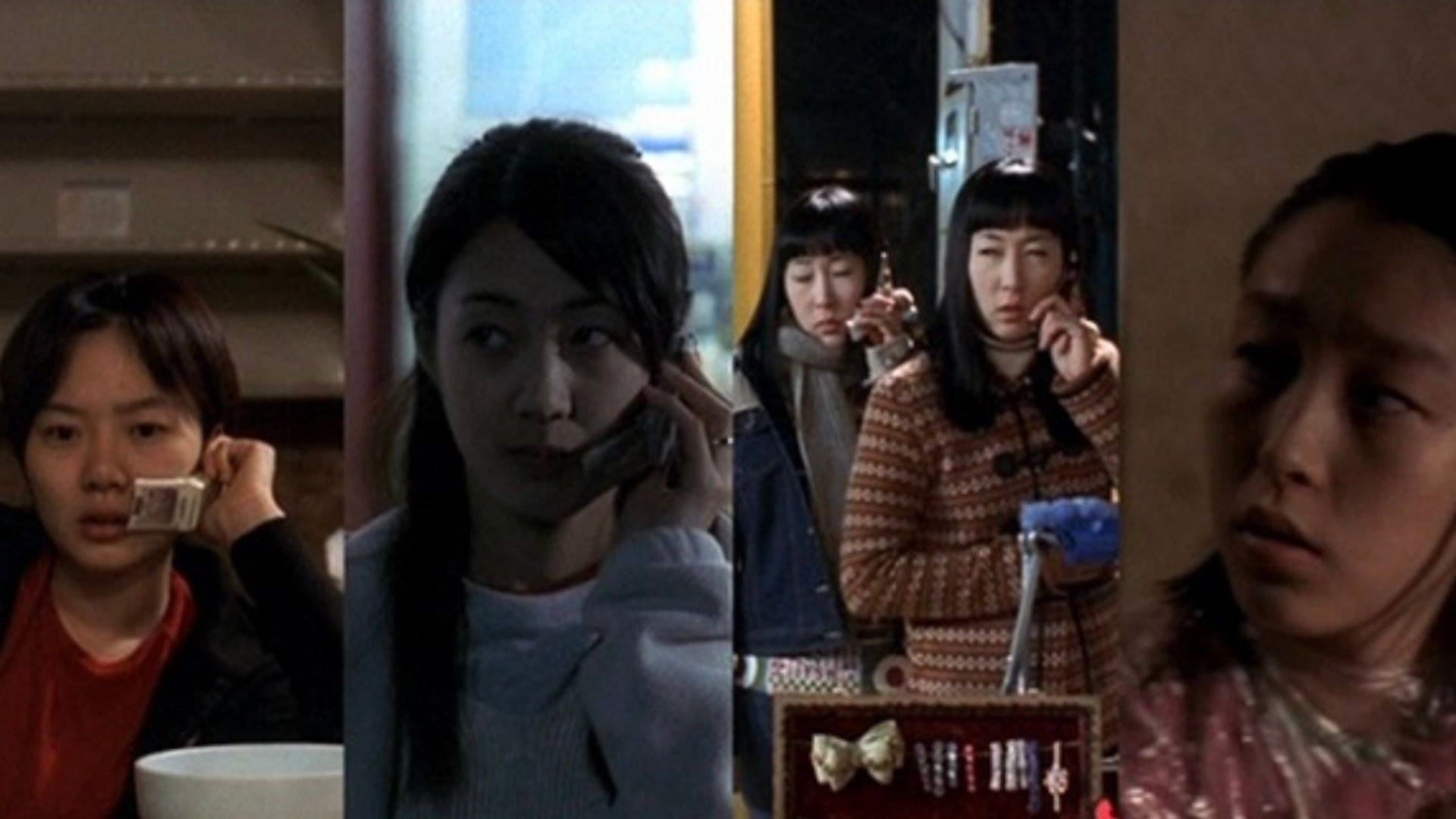
Originally released in 2001, the film has also become a snapshot of Korean culture circa Y2K: flip phones with bead straps, caret-laden emoticons, Dance Dance Revolution. Even as the distance between them grows, the friends keep in contact via text messages and conference calls. Jeong presciently portrays these emerging forms of digital communication, rendered with overlaid graphics and split screens, as being no substitute for in-person communion. In his writeup for Screenslate, Dan Schindel posits that in the years following the events of the film, their interactions would dissipate into the occasional social media update. Indeed, this has become the de rigueur manner in which we remain tenuously connected to school friends, now voyeurs into lives we used to just call “ours.” The technology has changed, but the aches and resentments haven’t.
Tasting Notes
The experience of food doesn’t end with the final taste; scent lingers. After Hae-joo moves from Incheon to Seoul, she boasts of no longer having to “smell pork ribs in the subway” on her commute home. Meanwhile, the roof of the shack Ji-young shares with her grandparents is about to collapse.
Tae-hee and her family dine at a franchise location of Tony Roma’s Famous Ribs, and her father is unfamiliar with the concept of baby back ribs and choosing between different sauces. Shielding his befuddlement with braggadocio, he orders sample platters for the entire family. “When in doubt, always order the most popular dish,” proclaims the patriarch, who advises his son that “a man who graciously eats what he gets will make it big.” Tae-hee can barely conceal her disgust.
In the happier moments when the five friends get together, they’re shooting soju and sipping bottles of Cass beer while munching on classic drinking snacks: fried chicken, mandu, tteokbokki. They also play a version of spin the bottle where the person it points to simply takes a shot.
My Name Ain’t Suzie (1985)
New restoration premiering at the Metrograph in NY on July 18 with an introduction by film scholar Xueli Wang. Also available on Blu-Ray.
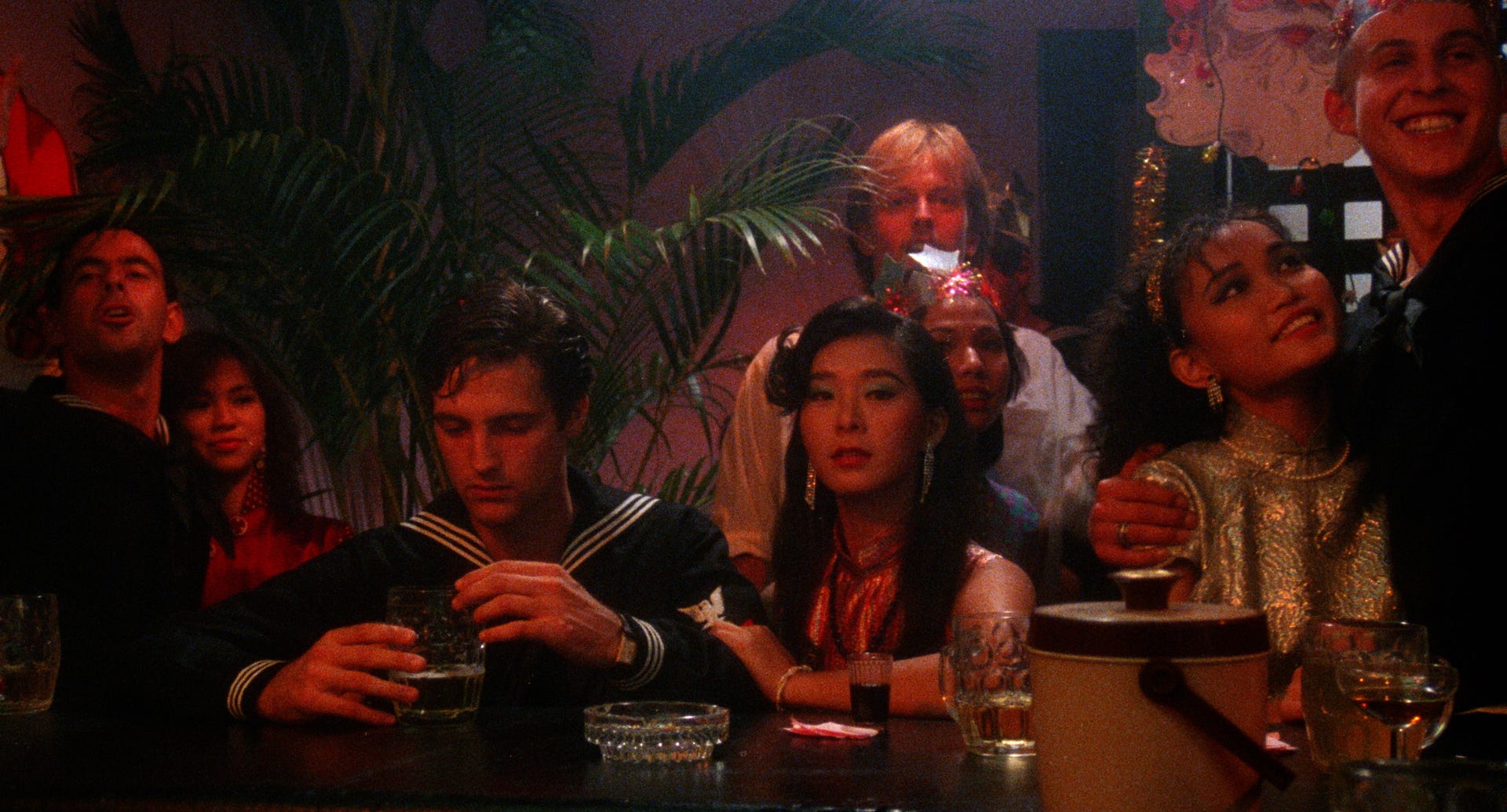
With its very title, Angela Chen’s melodrama announces itself as a bold rebuke to the orientalist romances produced by midcentury Hollywood—specifically The World of Suzie Wong, a 1960 picture in which William Holden falls in love with a Hong Kong prostitute. Chen flips the perspective, telling the rags-to-riches story of Shui-Mei (Pat Ha Man-Jik), who starts as a teenager working at a brothel frequented by American soldiers in the late 1950s and ends up, by the 80s, running her own nightclub empire. Sex work is portrayed not as a tragedy, but as a pragmatic decision: for a girl coming from an impoverished fishing village, the brothel is a rare path to earn real money. It’s a situation precipitated by the American military presence—and the colonial arrangements responsible for it. The film never averts its gaze from the dark side of seemingly easy times, but Shui-Mei finds genuine connection with both her colleagues and fellow residents of the red-light district she comes to call home. Among the ensemble cast is Anthony Wong, making his screen debut as a mixed-race Danny Zuko type tracking down his estranged American father, and Deanie Ip, as a female mafioso who may be Shui-Mei’s partner in more than business.
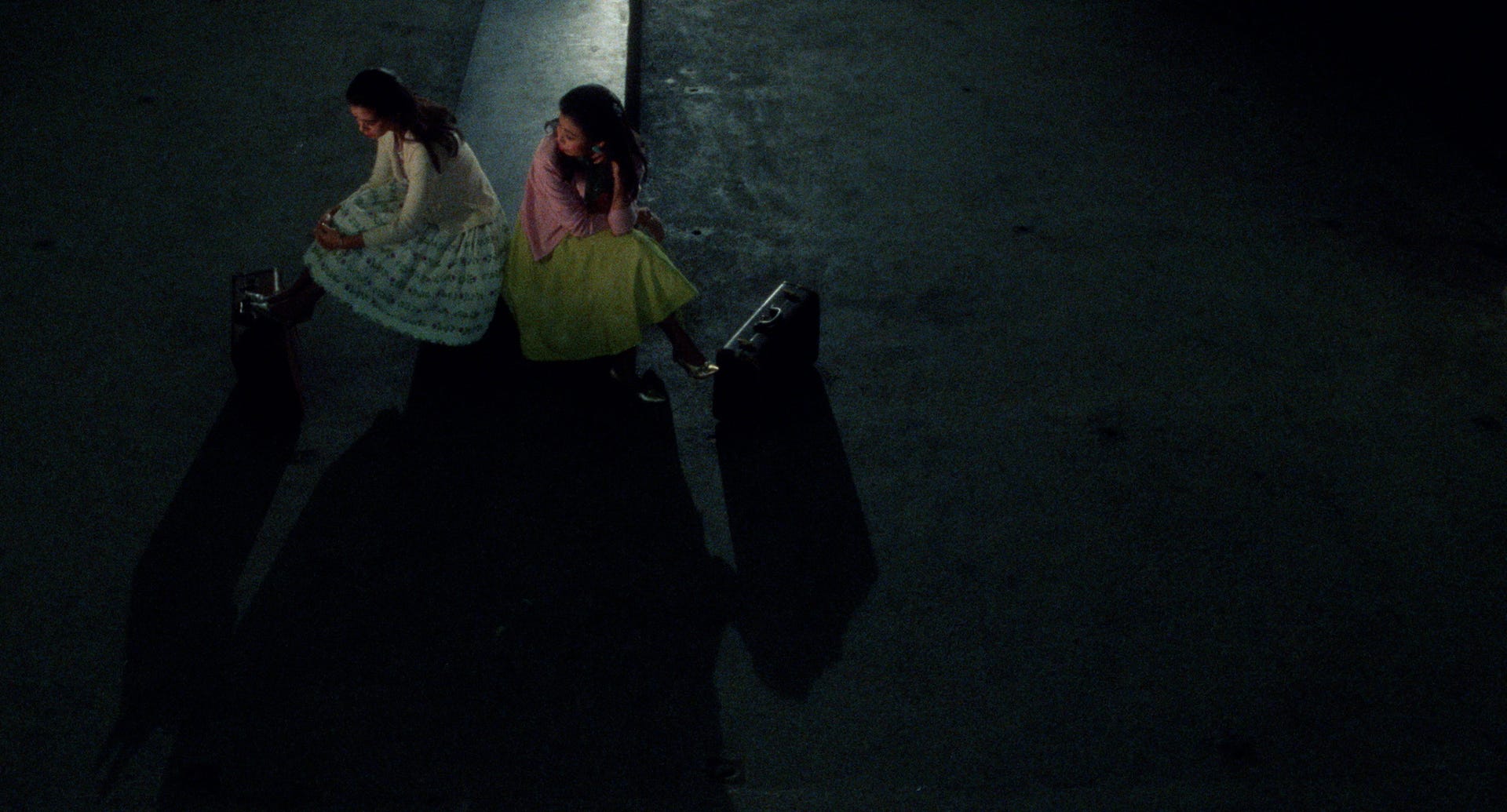
Essential reading on My Name Ain’t Suzie can be found in the Metrograph Journal, where Elissa Suh has written an eloquent essay on how Chen’s opening images invert the controlling gaze of The World of Suzie Wong, the film’s attenuation “to the textures of brothel life, lingering on the moments in between sex work,” and how Anthony Wong’s own family history informed his character.
Gail Daughtry and the Celebrity Sex Pass
Now playing in wide release.
Eight years before winning the Oscar for Best Picture, the American filmmaker Peter Farrelly (along with his brother Bobby) directed a far less acclaimed movie called Hall Pass. Two middle-aged besties (Owen Wilson and Jason Sudeikis) are granted a one-week reprieve from their marital commitments, only to realize they like being with their wives. Neither ends up sleeping with anyone else. What begins as a hedonistic exploration of a midlife crisis turns out to be a contemporary riff on the comedy of remarriage.
Because their titles evoke similar concepts, I had Hall Pass in mind while watching Gail Daughtry and the Celebrity Sex Pass, a new comedy directed by David Wain that, I should say, made me laugh a lot more. If you’re unfamiliar with the idea of a celebrity sex pass, it’s exactly what it sounds like: you and your partner each pick a famous person whom, should the opportunity arise, you are allowed to sleep with sans repercussions. For the vast majority of people this is a thought experiment; no one ever expects their significant other to be able to cash in.
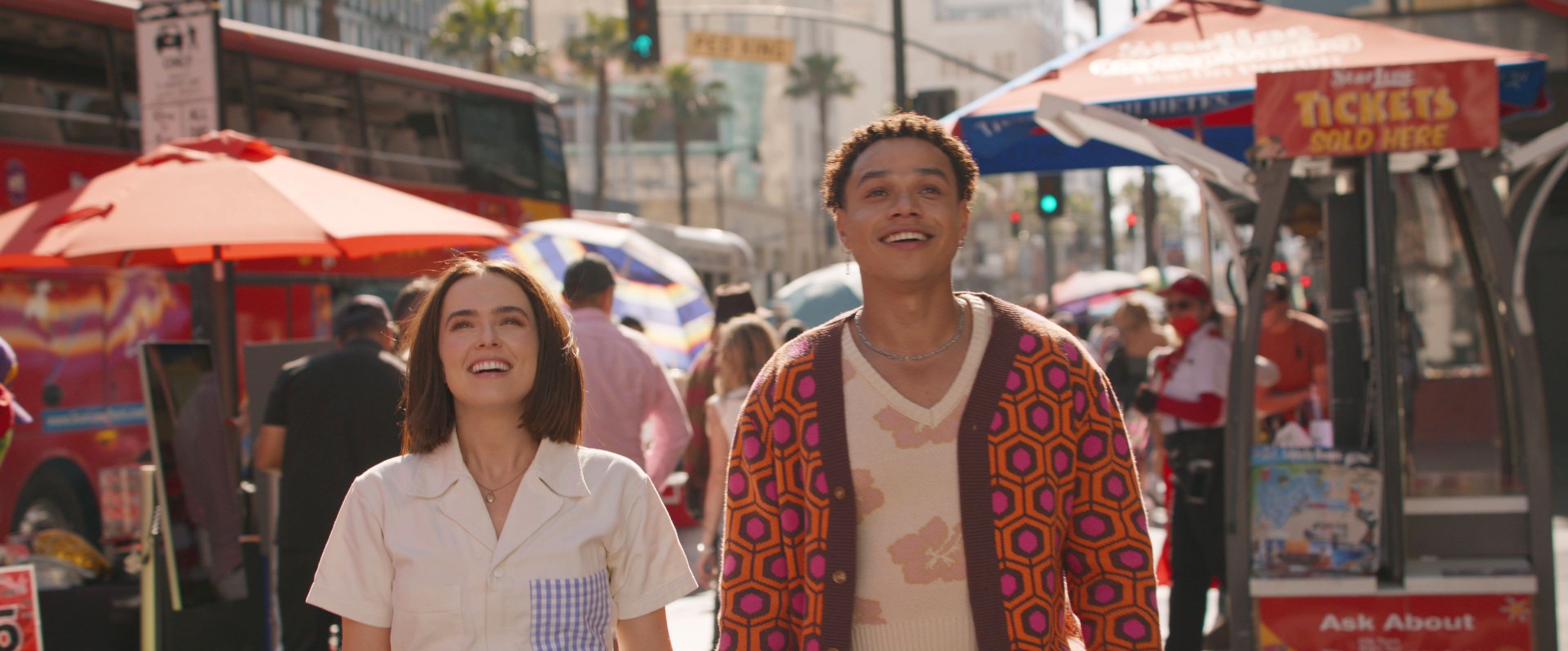
But that’s what happens to the titular Gail Daughtry (Zoey Deutch), a hairdresser from small town Kansas who is engaged to high school sweetheart Tom (Michael Cassidy). After learning about the concept, the two set their respective hall passes. Hers is Jon Hamm; his, Jennifer Aniston. Then, after a brief series of improbable events, Tom hooks up with his pass1.
Spinning out after this breach in trust, Gail tags along with fellow hairdresser Otto (Miles Gutierrez-Riley) on his trip to Los Angeles. There, a psychic tells her the only way to save her impending marriage is to settle the score and sleep with her own celebrity pass. Aided by a troupe of misfits, one of whom is a very unemployed John Slattery (playing a version of himself), she embarks on a quest through Hollywood to find—and fuck—Jon Hamm. (One wonders how this premise would be received if it were flipped: a guy on an odyssey to bag Jennifer Aniston. Not well, I imagine, as it now sounds creepy.)
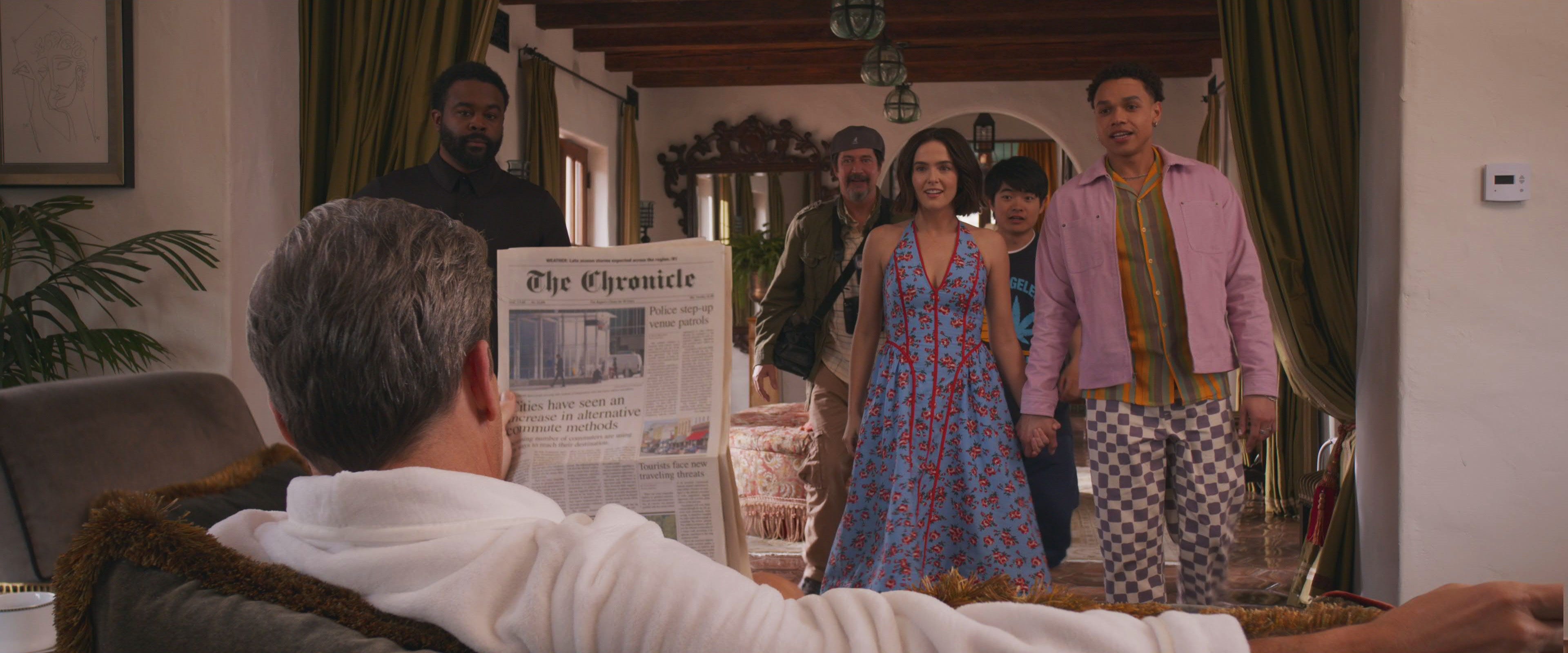
Unlike the brothers Farrelly, Wain, who wrote the screenplay with fellow The State alum Ken Marino, is not particularly invested in working out how Gail and her fiancé can mend their relationship. Gail Daughtry is not a comedy of remarriage but an extended riff on The Wizard of Oz. Both heroines, along with their compatriots, are searching for an elusive benefactor who can provide what each of them needs: a heart and a way home in one case; an acting gig and a passionate one-night stand in the other. But Gail Daughtry makes a fatal divergence. The Wizard turns out to be an ordinary man with no magical abilities; Dorothy and friends had what they were looking for all along. Hamm has the power to deliver on his promises, and he does.
Perhaps Wain prefers to offer his characters a smoother path to wish fulfillment2. But for a film built entirely on zany bits—your enjoyment of this film will depend on your tolerance for non sequiturs—it doesn’t commit to its biggest one. Wain sets up his movie to be an Oz parody but won’t follow it to the one place where it matters: Hamm should be a fraud, and he isn’t. Still, as far as Wizard of Oz adaptations go, I much preferred this to Wicked.
Tasting Notes
Upon Gail’s arrival to Los Angeles, a hotel concierge points her to where she can sample the “local cuisine”—a McDonald’s around the corner, Starbucks two blocks away. (This gag is only mildly funny.) She doesn’t eat a single taco; she should have consulted my list.
I don’t know if this applies to the real Jon Hamm or just the onscreen version of himself, but his favorite dessert in this film is a pineapple coconut pancake. Can’t say that appeals to me!
Aniston’s cameo calls back to an episode of Friends that raises the same idea. Ross puts Isabella Rossellini on his list but swaps her out because she’s too international to be in New York. Then she walks into Central Perk.
Alternate theory: Hamm wouldn’t want to portray himself, even satirically, as impotent.